












Vacuum Insulation Panels: Composition, Performance Characteristics and Service Life
It is precisely this combination of exceptional properties that has made Vacuum Insulation Panel a highly sought-after material in demanding applications.
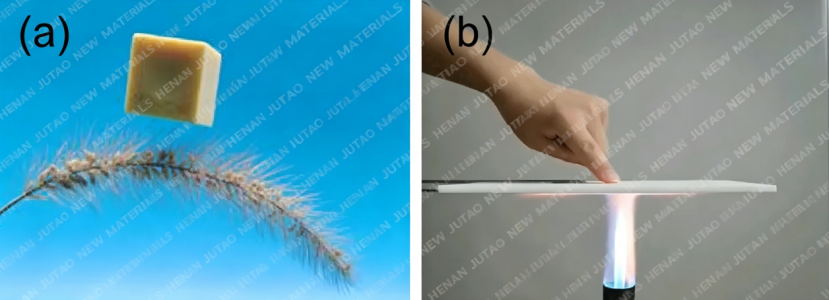
Vacuum Insulation Panel is an advanced thermal insulating material produced through a series of physical and chemical reactions. It is composed of silicon dioxide (SiO₂) particles with diameters in the tens of nanometres, combined with infrared opacifiers and fibres. The material's structure contains a vast number of nanoscale pores, which are responsible for its outstanding thermal insulation performance. The pore structure is stable and predominantly closed-cell, conferring not only excellent thermal resistance but also good freeze-thaw resistance and sound absorption properties.
Under normal conditions of use and with appropriate maintenance, the material has an average service life exceeding 30 years. Throughout its designed service life, it remains resistant to degradation caused by dry or humid environments, electrochemical corrosion, and external factors such as insect infestation, fungal or algal growth, or damage by rodents.
Key Performance Characteristics
- High-Temperature Resistance
- Can withstand continuous exposure to temperatures of 250–300 °C.
- Offers short-term resistance up to 400–500 °C in fire scenarios, representing high thermal stability among polymer-based materials.
- Inherently Flame Retardant
- Exhibits excellent flame-retardant properties: it is difficult to ignite, does not sustain combustion easily, and produces minimal smoke and no significant harmful gases upon thermal decomposition.
- The amine free radicals within its molecular structure act as effective scavengers, interrupting the combustion chain reaction by capturing other free radicals generated during high-temperature decomposition.
- Resistance to Flame Penetration
- When exposed to direct flame, the material forms a protective char layer on its surface.
- It demonstrates no melting, dripping, or curling. The core foam structure remains largely intact behind the surface char layer, which acts as an effective thermal barrier.
- Low Smoke Density and Low Toxicity
- Composed solely of carbon, hydrogen, and oxygen atoms, its primary thermal decomposition products are carbon and oxides, with very low emission of toxic gases (only trace amounts of CO).
- Its maximum smoke density is exceptionally low at 5%, compared to 74% for materials like polyurethane.
- Superior Thermal Insulation
- Features a uniform, fine closed-cell structure. When formulated with additives like polystyrene particles, it achieves a very low thermal conductivity ranging from 0.022 to 0.040 W/(m·K).
Jutao Environmental Technology — Specialists in Aerogel Material Solutions
Stay connected with us for the latest updates, industry insights and application solutions in the aerogel sector.