












Thin-Format Aerogel for Battery Packs and Electronics: Specifying Film, Carbon Blanket and Panel Barriers
The One and a Half Millimetres Nobody Had Budgeted For
A module integrator in Central Europe was assembling a stationary storage pack when the safety review came back with a requirement that had never appeared in the original bill of materials: a thermal propagation barrier between cells, and not more than 1.5 mm of space to put it in. The engineering team priced a mica sheet, then discovered that under cell swelling it cracked and that the pack gained almost a kilogram per module. The programme stalled for six weeks because the insulation had been treated as a commodity line item instead of a safety component with its own specification. What eventually unblocked it was a thin-format aerogel, and what nearly unblocked it wrongly was ordering the first film that matched the thickness number on the cover of a datasheet.
Thin aerogel behaves nothing like the blanket that insulation contractors know. It is bought per square metre against a temperature, a compression load and a fire test, not against a lambda value alone. Treat a sub-millimetre barrier as an engineered part with its own datasheet, its own assembly process and its own test evidence, and the programme stops slipping. Here is the specification sequence that industrial EPC buyers and OEM pack builders should run before the first article is ordered.
Start With What the Barrier Has to Stop
The first question is not thickness. It is direction: are you stopping heat leaving a failing cell, stopping external heat reaching sensitive electronics, or holding a temperature inside an enclosure? A propagation barrier sits between cells and must survive a thermal event of several hundred degrees for a defined number of minutes. A heat shield around a control board only has to slow a much lower temperature rise. An enclosure liner has to hold a setpoint for hours. Write the duty as a single sentence with a temperature, a duration and a consequence, because both the product choice and the test evidence follow from it. Buyers who skip this step routinely over-specify and pay for a carbon-grade material where a general-purpose film would have passed.
For cell-to-cell propagation work, the grade pack builders most often land on is a carbon aerogel. It handles the higher continuous temperature and, unlike an organic foam or a polymer sheet, it does not melt, drip or contribute fuel. Specify a carbon grade for anything that has to sit inside a pack and survive a propagation event, and keep the general silica grades for external shielding and enclosure work. You can review the carbon-grade route here: carbon aerogel insulation for battery fire protection.
Thickness Is the Easy Number; Compression Is the Hard One
Every thin-format specification carries two thicknesses, a nominal one and a compressed one, and only the second matters once the pack is bolted up. Cells swell through their service life, and a barrier that performs beautifully at 1.5 mm in the free state may be squeezed to 1.0 mm under clamping pressure, at which point its thermal resistance has changed and the safety margin you paid for has quietly disappeared. Ask for the thermal conductivity at the compressed thickness your assembly actually applies, not at the nominal thickness printed on the front page. This one request separates serious suppliers from catalogue traders faster than any price negotiation.
Pair that with compression set and recovery after cycling. A pack that is bolted, heated, cooled and re-torqued through validation needs a barrier that returns to most of its original loft each time. Put a minimum recovery percentage and a maximum permanent set into the drawing, then verify it on a production-intent assembly rather than on a flat laboratory coupon.
Film Where Space Is Tight, Blanket Where the Surface Is Awkward
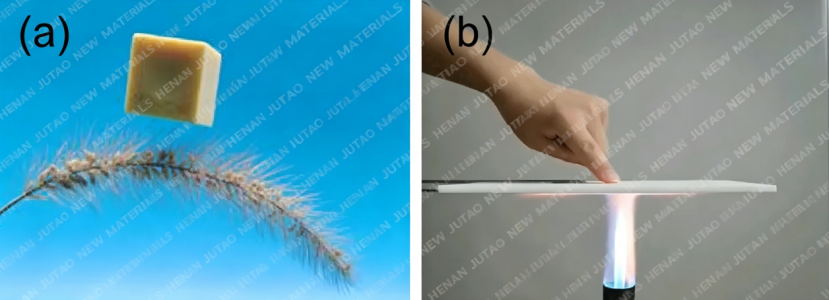
Aerogel film is the right answer when the gap is genuinely small and the surface is flat and clean. It delivers a very low thermal conductivity in a fraction of a millimetre, and it can be die-cut into repeatable shapes on a production line. For electronics bays, control boards and tight module walls, a single-sided film with an adhesive backing turns the insulation step into a peel-and-stick operation. Use film wherever a flat surface, a tight gap and a high-volume assembly line come together, because the labour saving is as real as the thermal saving. A general-purpose single-sided grade for that duty is single-sided aerogel thermal insulation film.
Electronics assembly adds two requirements that pipe insulation never has to meet: dielectric behaviour and outgassing. A barrier that sits against a live board must be specified for dielectric strength and low outgassing, or you will trade a thermal problem for a contamination and tracking problem that shows up in the field a year later. The electronics-oriented film grades are built around exactly this duty: aerogel insulation film for electronics.
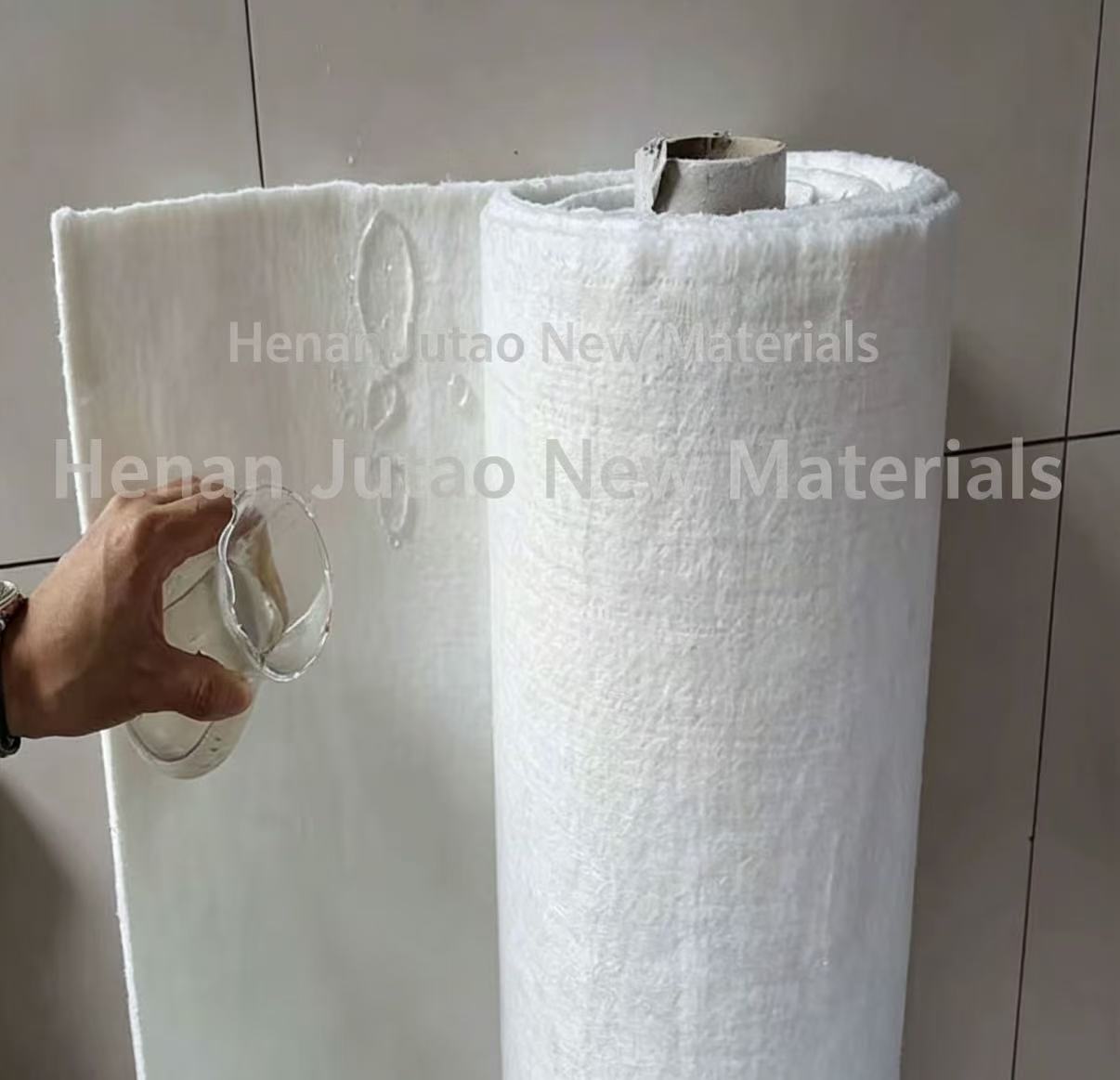
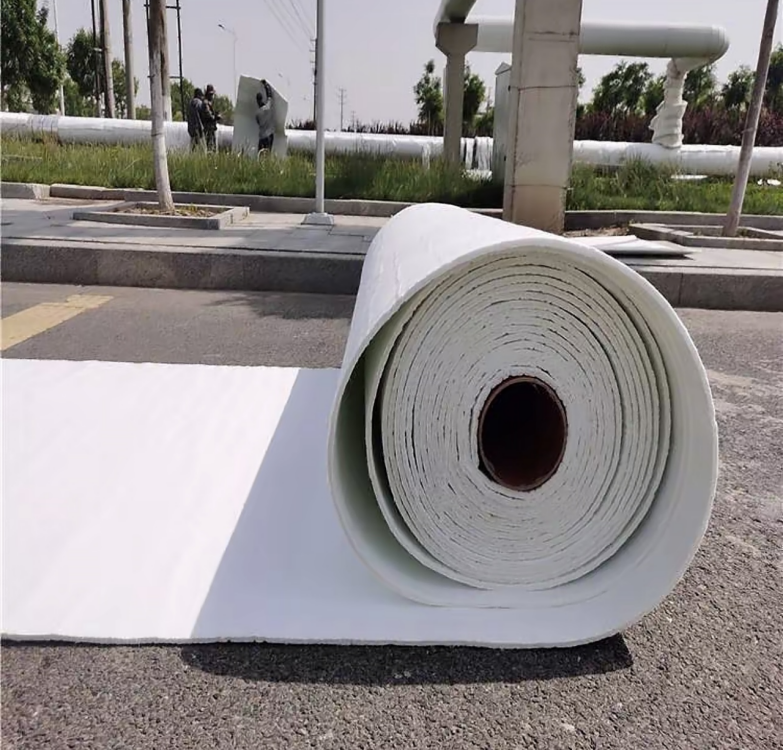
Any surface with a radius, a bracket, a busbar or a weld bead will bridge a rigid film and leave a gap that heat finds immediately. A practical rule for pack and cabinet work: film on the flat faces, blanket on everything with geometry, and a defined overlap where the two meet. A flexible blanket conforms under light pressure, absorbs tolerance stack-up and takes vibration without cracking at a fold, so keep one blanket grade qualified alongside the film and never let the assembly team improvise: OEM aerogel insulation blanket.
Enclosures Are an Area Problem, Not a Thinness Problem
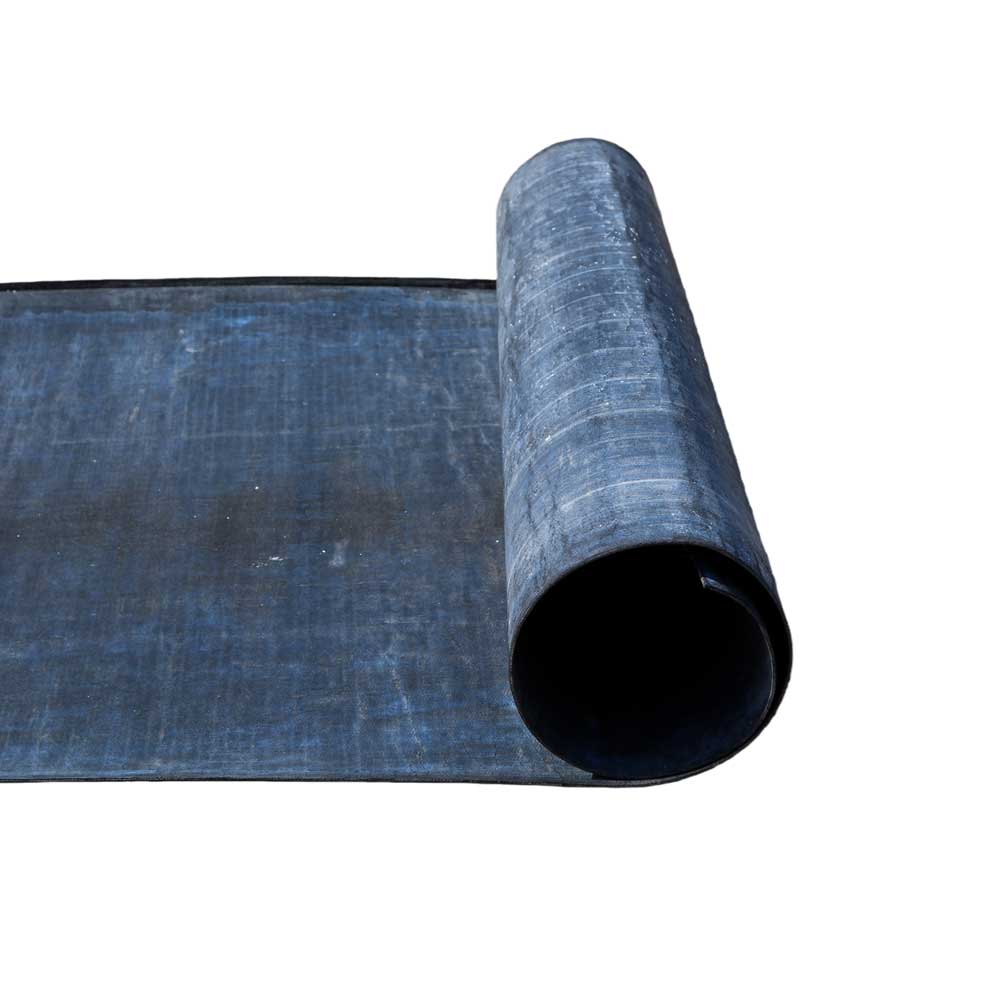
Some jobs are simply not a thin-film problem. A battery cabinet, a chilled enclosure or a thermal box that must hold a setpoint for hours is an area problem, and the right answer is a vacuum insulation panel with a defined edge detail and a defined puncture consequence. A punctured vacuum panel loses most of its performance instantly, so the specification must state what happens if one is damaged in service, how it is detected and how it is replaced. Where the duty is an enclosure rather than a cell gap, start from the panel route instead of forcing a film to do a job it was not designed for: OEM vacuum insulation panels.
Die-Cut Parts: Tolerance Is Part of the Thermal Spec
The moment film or blanket is converted into a die-cut part, the tolerance on the cut becomes a thermal tolerance. A part cut 1 mm short on a cell wall leaves an uncovered strip, and heat travels the uncovered strip rather than the barrier. Specify the cut tolerance, the corner radius and the backing release liner on the part drawing, and approve a first-article fit against the real housing rather than against a drawing. This is also the point at which you decide whether the adhesive covers the whole face or only a border, because a full-face adhesive changes the way the part behaves under heat.
Build the Evidence File Before the First Article Ships
Pack builders and electronics OEMs do not buy on a datasheet alone. They buy on a file: reaction-to-fire evidence, thermal conductivity measured by a named method at the compressed thickness, dielectric strength, outgassing or halogen content, dimensional tolerance on the cut part, and a batch code that traces back to the production lot. Assemble that file once, in English, with test house names and report dates, and every subsequent project quotation becomes a copy-and-paste exercise instead of a six-week investigation. Ask which documents ship free with samples and which require a paid test programme, because that answer tells you how much of the cost is already inside the unit price.
What Good Looks Like
A defensible thin-format specification states the duty in one sentence, gives the temperature and the duration, fixes the compressed thickness and the recovery requirement, names the format per surface type, sets the cut tolerance and lists the documents that travel with the first article. Do that, and the insulation stops being the reason a pack programme slips and becomes the part of the design that quietly passes its safety review the first time.