








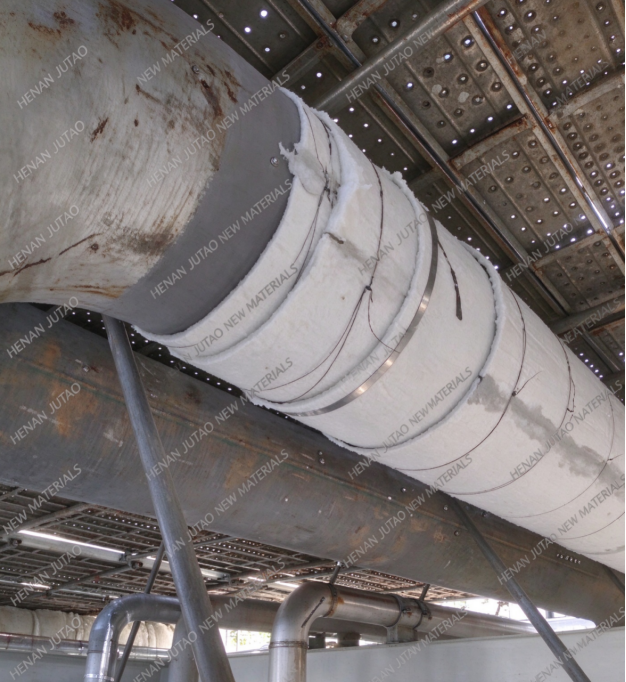
Technical Characteristics of HVIP Aerogel Vacuum Insulation Panels
HVIP Aerogel Vacuum Insulation Panels (Vacuum Insulation Panel, VIP) are manufactured using advanced international technology. An insulation core containing a high density of nano-scale pores is encapsulated within a high-barrier multilayer film and processed under vacuum conditions.
The thermal conductivity of HVIP is ≤ 0.005 W/(m·K), with a thermal resistance of ≥ R-24 per inch, providing outstanding thermal insulation performance.
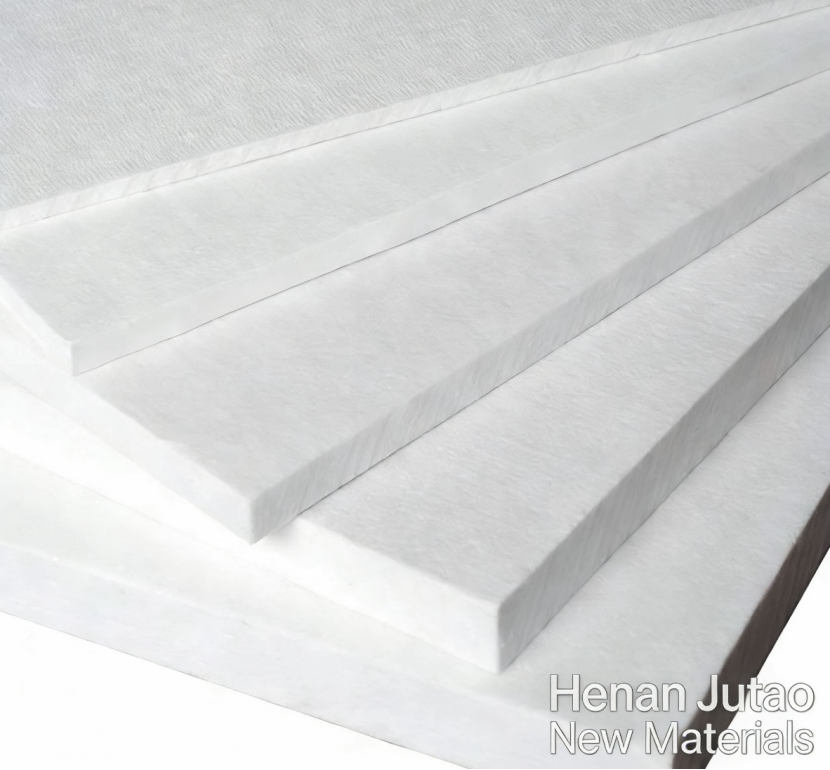
Key Characteristics
- Nano-porous Aerogel Core Structure
HVIP panels use aerogel-based fumed silica as the core material—an inorganic nano-porous material with an average particle size of 10–20 nm. The core is reinforced with inorganic fibres and supplemented with a small amount of infrared opacifiers and activating agents.
This nano-structured core forms a large number of nano-pores, effectively reducing solid-state heat conduction. At the same time, it adsorbs and immobilises trace amounts of permeating gases, allowing the panel to maintain a high vacuum level over long periods. As a result, HVIP panels offer excellent thermal insulation, high long-term stability, and an extended service life.
- Advanced “Back-Sealed M-Shape” Encapsulation Design
HVIP panels adopt an innovative back-sealed M-shaped encapsulation, improving upon traditional four-edge sealing, three-edge sealing, and conventional back-sealing methods.
The resulting panel geometry is highly regular and compact, similar in form to a cigarette pack, significantly reducing the impact of thermal bridges caused by weaker insulation performance at panel edges.
In addition, HVIP uses advanced high-barrier films that provide enhanced gas-barrier performance while reducing film thickness. This effectively avoids common issues such as difficult heat sealing, excessive gas leakage rates, and increased lateral heat loss caused by overly thick barrier films.
- High Forming Stability and Fail-Safe Thermal Performance
HVIP panels are produced using advanced forming technologies. Owing to the unique nano-structure of aerogel fumed silica, the core exhibits excellent mechanical integrity and dimensional stability.
Even if the vacuum integrity is compromised, the core does not collapse, delaminate, or disintegrate. Under such conditions, the thermal conductivity remains within 0.018–0.020 W/(m·K), ensuring a predictable and reliable insulation performance.
- Automated Production and Quality Control
HVIP aerogel vacuum insulation panels are manufactured on imported fully automated production lines, operating in accordance with international standardised processing and quality management systems. This ensures consistent product performance, high reliability, and long-term stability.
Jutao Environmental Technology — Specialists in Aerogel Material Solutions
Stay connected with us for the latest updates, industry insights and application solutions in the aerogel sector.