



News










0102030405
How to Identify Quality of Aerogel Insulation & Vacuum Insulation Panels – A Practical Verification Guide for Buyers
2026-06-03
When sourcing high-performance thermal insulation materials, comparing only catalog parameters is often insufficient to judge real product quality. For both aerogel blankets and vacuum insulation panels (VIP), long-term thermal performance, fire safety, and service life depend on compliance with international testing standards and traceable third-party test data.
From a professional procurement perspective, this article systematically introduces the key dimensions for verifying the quality of aerogel insulation materials and vacuum insulation panels.
1. Verify Thermal Conductivity and Testing Standards
Thermal conductivity is the primary indicator measuring the thermal barrier performance of aerogel insulation and vacuum insulation panels.
High-quality silica aerogel blankets typically have a thermal conductivity below 0.020 W/(m·K) at 25℃, with a typical range of 0.013–0.018 W/(m·K).
VIP panels generally achieve a thermal conductivity of only 0.005–0.008 W/(m·K).
Buyer Checklist:
- Require suppliers to provide third-party test reports based on ASTM C177 (Guarded Hot Plate) or ISO 8301 / ISO 8302 (Heat Flow Meter or Guarded Hot Plate), not just in-house test data.
- Confirm tests are conducted at 25℃ under normal atmospheric pressure, avoiding values obtained under vacuum or cryogenic ideal conditions presented as real-world performance.
2. Validate Operating Temperature Range and Thermal Stability
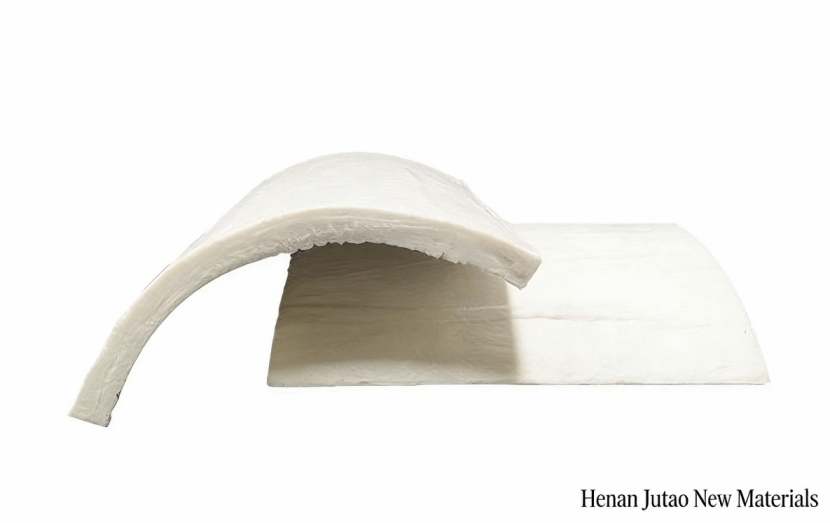
Aerogel blankets are classified under ASTM C1728 into:
- Type I (up to ~125℃)
- Type II (up to ~200℃)
- Type III (up to ~649℃)
To verify quality, request:
- Maximum use temperature test reports (ASTM C411 / ASTM C447)
- Linear shrinkage test under hot soaking (ASTM C356)
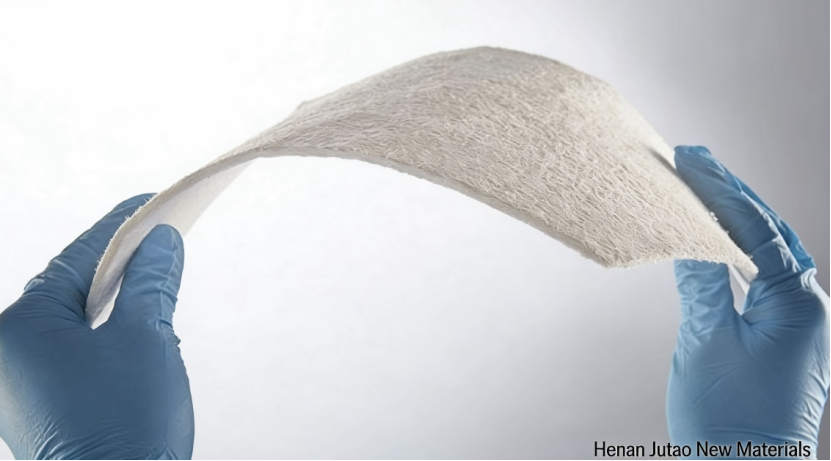
Genuine high-performance products maintain structural integrity at high temperatures, with no significant powdering or shrinkage.
For cryogenic LNG or low-temperature applications, confirm material suitability and thermal cycle stability from -200℃ to target operating temperatures.
3. Inspect Combustion Performance and Fire Rating
Fire resistance is critical in industrial and building applications.
Ask suppliers for:
- ASTM E84 Surface Burning Characteristics report, confirming Flame Spread Index and smoke density meet Class A requirements.
- For the EU market, A1 or A2 non-combustible certification under EN 13501-1.
Genuine high-quality aerogel insulation blankets are non-combustible, produce no molten drips, and generate low smoke when exposed to fire.
4. Evaluate Hydrophobicity, Density and Mechanical Properties
Hydrophobicity
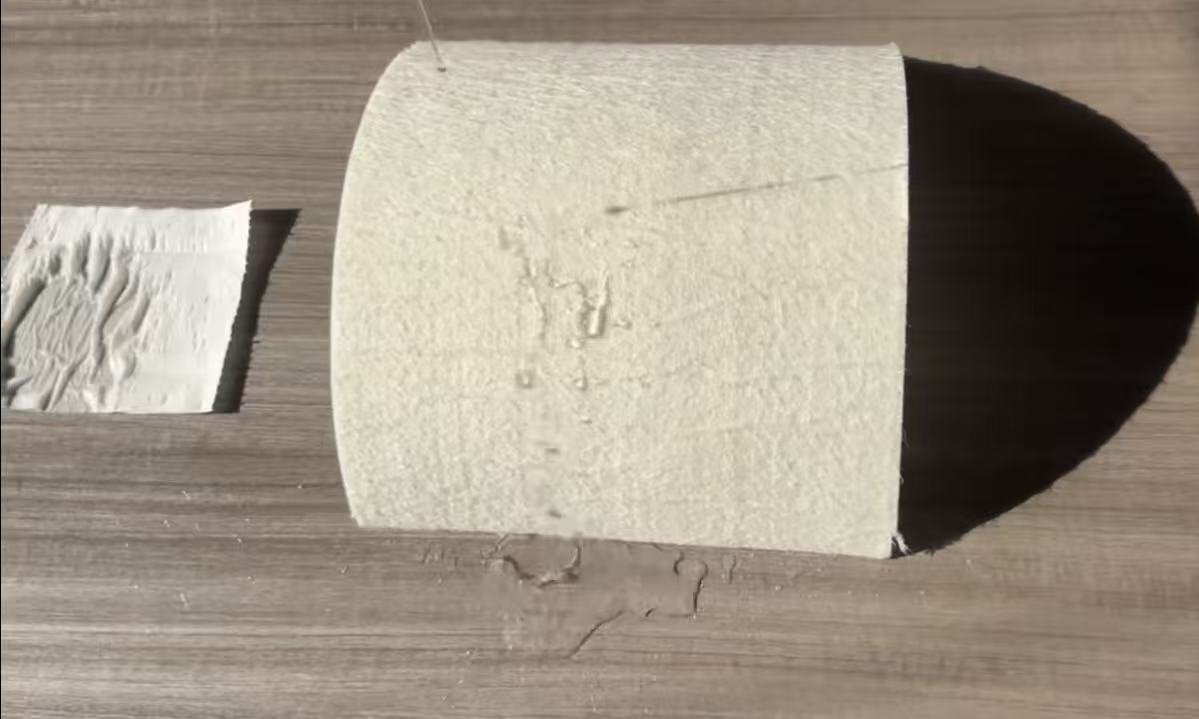
High-quality aerogel blankets are organically modified for superhydrophobicity, with a static water contact angle typically ≥ 140°–150° and water repellency rate ≥ 98% (tested per ASTM C1763 / ASTM C1104).
Water absorption causes nanopore collapse and a sharp rise in thermal conductivity, so performance retention after hot-humid aging must be verified.
Density & Thickness
Per ASTM C303, industrial-grade aerogel blankets usually have a density of 160–240 kg/m³, with tolerance controlled within ±5% of nominal value.
Tensile & Compressive Strength
Per ASTM C165 or corresponding ISO standards, verify the blanket resists thinning or damage under installation compression or bending to ensure long-term insulation performance.
5. Special Verification Points for Vacuum Insulation Panels
For vacuum insulation panels, beyond thermal conductivity, focus on:
Vacuum Retention & Accelerated Aging Test
According to ISO 16478, assess thermal conductivity changes under 85℃ / 85% RH accelerated aging.
Premium VIPs maintain high thermal resistance after aging, with a design service life of decades.
Barrier Film Gas Transmission Rate
- Water Vapor Transmission Rate (WVTR) ≤ 0.05 g/(m²·day)
- Oxygen Transmission Rate (OTR) ≤ 0.5 cm³/(m²·day·atm) to ensure long-term vacuum stability.
Check core material type (typically fumed silica or open-cell foam) and edge-sealing quality to avoid thermal bridging that reduces overall insulation efficiency.
6. Require Complete Quality Certifications and Batch Inspection Documents
Reliable suppliers should provide:
- ISO 9001 Quality Management System certification
- Certificate of Analysis (COA) for each batch, including measured thermal conductivity, thickness, and density
- Full-performance test reports from accredited third-party laboratories (SGS, TÜV, Intertek, etc.)
- Samples for on-site comparison or third-party re-testing when necessary
Summary
Verifying the quality of aerogel thermal barriers and vacuum insulation panels depends on standardized third-party test data, not brochure claims.
Focus on thermal conductivity under ASTM/ISO standards, maximum operating temperature, Class A fire certification, hydrophobicity, and VIP vacuum retention.
Only rigorously validated materials ensure long-term energy efficiency and safety in critical applications including industrial pipelines, building envelopes, and new energy battery insulation.