



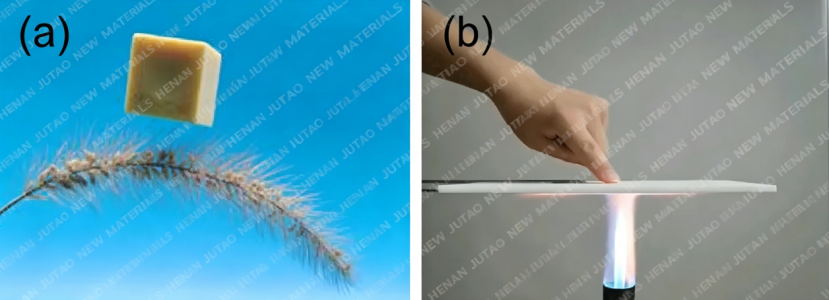









Custom China Aerogel Wall Key Bonding Technology Considerations for Fiber-Reinforced Aerogel Insulation Sheets
Fiber-reinforced aerogel insulation sheets are advanced thermal insulation materials characterised by high porosity (≥80%), ultra-low thermal conductivity (0.015–0.03 W/(m·K)), and low density. They are widely applied in aerospace, new energy battery systems, and energy-efficient building envelopes.
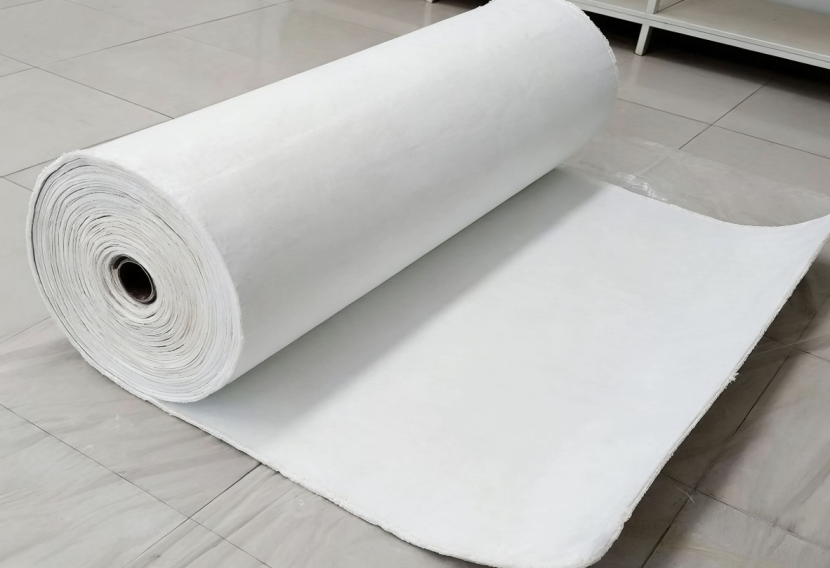
However, intrinsic material properties such as high brittleness, low surface energy, and sensitivity of the porous structure make reliable bonding a critical bottleneck for large-scale engineering applications.
This document outlines the key bonding technology considerations from five dimensions: adhesive selection, surface pretreatment, process control, interface optimisation, and quality verification.
Ⅰ. Adhesive Selection: Balancing Performance and Compatibility
Adhesive selection must be fully aligned with the characteristics of fiber-reinforced aerogel insulation sheets and should follow the principles below:
- Thermal Conductivity Matching
The thermal conductivity of the adhesive should be close to that of the aerogel material (≤0.05 W/(m·K)) to avoid the formation of thermal bridges.
Typical solutions include silicone-based adhesives (0.02–0.04 W/(m·K)) or modified epoxy resins filled with nano hollow microspheres.
- Strength–Flexibility Balance
The adhesive should provide a minimum shear strength of ≥0.3 MPa to withstand mechanical loads, while maintaining an elongation at break of ≥5% to mitigate stress concentration caused by the brittle aerogel structure.
- Thermal Resistance Compatibility
For high-temperature applications (>300 °C), inorganic adhesives such as phosphate-based systems are recommended.
For low- and medium-temperature applications, organic–inorganic hybrid adhesives are preferred.
- Curing Behaviour Compatibility
The curing temperature must remain below the thermal decomposition temperature of the aerogel (<250 °C).
Curing shrinkage should be limited to ≤1% to prevent cracking caused by volumetric changes.
- Interfacial Wettability
The adhesive should exhibit low surface tension (≤30 mN/m) to ensure uniform spreading and sufficient wetting of the aerogel surface.
Ⅱ. Surface Pretreatment: Enhancing Interfacial Bond Strength
Fiber-reinforced aerogel surfaces are typically hydrophobic, with contact angles exceeding 100°. Targeted pretreatment is therefore essential to improve wettability:
- Plasma Surface Modification
Low-temperature argon or oxygen plasma treatment introduces active functional groups (e.g. hydroxyl and carboxyl groups), reducing the contact angle to below 30° and significantly enhancing adhesive spreading.
- Coupling Agent Treatment
Silane coupling agents (e.g. KH560) form covalent bonds with surface hydroxyl groups on the aerogel after hydrolysis, while reacting with adhesive molecules on the other end. This treatment can increase interfacial bond strength by 2–3 times.
- Surface Activation Coatings
Applying a low-concentration silica sol creates a nano-scale transition layer that improves wettability while preventing excessive adhesive penetration into the porous structure.
Ⅲ. Bonding Process Control: Precision to Prevent Defects
Precise control of process parameters is critical for achieving stable bonding performance:
- Adhesive Application Method and Thickness
Micro-spray coating or flexographic doctor-blade coating is recommended to ensure uniform adhesive distribution.
The adhesive layer thickness should be controlled within 5–15 μm. Excessive thickness increases thermal resistance, while insufficient thickness may lead to discontinuous bonding.
- Curing Conditions
A stepwise curing profile (ambient temperature → 60 °C → 120 °C) is recommended to avoid structural damage caused by rapid temperature rise.
Curing pressure should be maintained between 0.05–0.2 MPa to prevent collapse of the porous aerogel network.
- Bubble Suppression
Vacuum degassing before adhesive application and roller-assisted air removal after application help minimise interfacial bubbles and prevent abnormal heat transfer paths.
Ⅳ. Interface Optimisation: Stress Reduction and Stability Enhancement
Proper interface design significantly improves long-term reliability:
- Graded Interface Design
Incorporating aerogel powder into the adhesive forms a compositional gradient at the interface, reducing the mismatch in thermal expansion coefficients (≤5 × 10⁻⁶ /°C) and lowering the risk of thermal cycling-induced cracking.
- Rheological Property Control
The adhesive viscosity should be adjusted to 1,000–5,000 mPa·s, allowing controlled penetration into the surface pores (≤20 μm) without blocking the internal structure.
The resulting change in overall thermal conductivity should remain within ≤10%.
Ⅴ. Quality Verification: Multidimensional Reliability Assessment
Systematic testing is required to validate bonding quality:
- Mechanical Performance
Shear and peel strength tests should confirm that strength retention remains ≥80% across the temperature range from –40 °C to 150 °C.
- Thermal Performance
The overall thermal conductivity should be measured using the hot-wire method, with deviations from the original insulation sheet limited to ≤0.005 W/(m·K).
- Durability Testing
After thermal cycling (–40 °C for 1 h → 120 °C for 1 h, 50 cycles) and damp heat ageing (85 °C / 85% RH, 1,000 h), the bonded interface should exhibit no delamination or cracking.
Conclusion
The core challenge of bonding technology for fiber-reinforced aerogel insulation sheets lies in achieving an optimal balance between bond strength and thermal insulation performance, while effectively mitigating brittleness-induced stress.
Future development will focus on environmentally friendly adhesives, digitalised process control (e.g. AI-assisted adhesive thickness regulation), and multifunctional adhesive systems combining insulation and fire resistance, to meet increasingly complex engineering demands.
Breakthroughs in bonding technology will further accelerate the large-scale application of fiber-reinforced aerogel materials in high-end industrial sectors.
Jutao Environmental Technology — Specialists in Aerogel Material Solutions
Stay connected with us for the latest updates, industry insights and application solutions in the aerogel sector.