



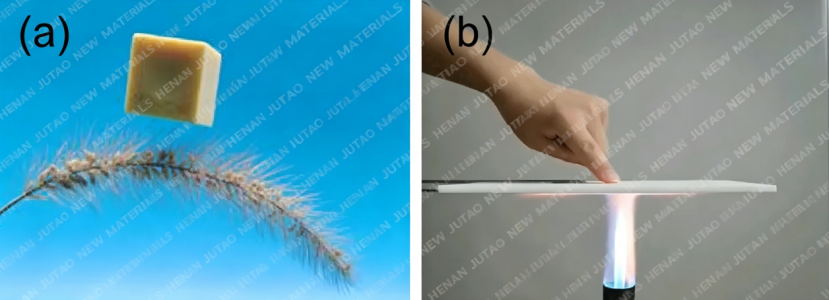









Custom China Facade System Lightweight Technology Advantages of Fiber-Reinforced Aerogel Insulation Sheets (II)
1. Structural Toughness and Functional Integration: Enhancing Performance through Stability
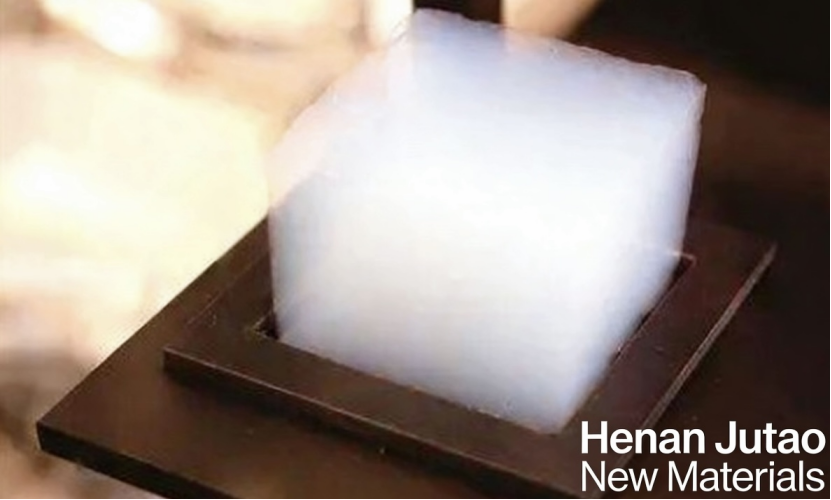
Lightweight design does not imply structural fragility. Through material modification processes—such as the incorporation of fibre reinforcement phases—fiber-reinforced aerogel insulation sheets achieve a combination of low weight and high mechanical robustness. At the same time, multiple functional properties, including water resistance, fire resistance, and corrosion resistance, can be integrated into a single material system. This avoids the weight increase typically caused by stacking multiple functional layers.
- Industrial Pipeline Insulation
Conventional pipeline insulation systems usually consist of thick mineral wool layers combined with metallic cladding, resulting in high weight and complex installation procedures.
Flexible fiber-reinforced aerogel insulation sheets can conform closely to curved pipe surfaces. With a thickness of only 2 mm, system weight can be reduced by approximately 50%, while integrated water resistance eliminates the need for additional waterproof layers.
- New Energy Battery Packs
Fiber-reinforced aerogel insulation sheets not only suppress the propagation of thermal runaway, but also integrate UL94 V-0 fire resistance and IPX7-level water resistance.
By replacing traditional multi-layer configurations consisting of insulation mats, fire-resistant boards, and waterproof membranes, overall system weight can be reduced by approximately 30%, while assembly efficiency is improved by around 40%.
Through multifunctional integration, fiber-reinforced aerogel insulation sheets evolve from a single material into a comprehensive system solution, achieving lightweight design while simultaneously simplifying structural complexity.
- Green and Sustainable Performance: Supporting Lightweight Design through Environmental Benefits
The lightweight advantages of fiber-reinforced aerogel insulation sheets extend across the entire product life cycle and are closely linked to sustainability objectives:
- Raw Materials and Manufacturing
Most fiber-reinforced aerogel products are based on environmentally friendly raw materials, such as silica-based or bio-based components.
Their production energy consumption is approximately 50% lower than that of traditional ceramic insulation materials, and the manufacturing process generates no harmful exhaust emissions.
- Transportation and End-of-Life Management
Owing to their low mass, transportation costs for fiber-reinforced aerogel insulation sheets are reduced by approximately 60% for the same transported volume, while carbon emissions per unit product decrease by around 35%.
Certain products are recyclable or partially biodegradable, effectively reducing waste pollution associated with conventional insulation materials.
The combination of lightweight performance and environmental sustainability aligns closely with global carbon reduction and neutrality targets, positioning fiber-reinforced aerogel insulation sheets as a key enabling material for the sustainable development of advanced industries.
Jutao Environmental Technology — Specialists in Aerogel Material Solutions
Stay connected with us for the latest updates, industry insights and application solutions in the aerogel sector.