












Custom China Aerogel Panels The Working Principle of Vacuum Insulation Panels (VIPs): A New Solution for Low-Energy Thermal Insulation
With the growing global demand for energy efficiency, carbon reduction, and sustainable development, high-performance insulation materials have become increasingly important in industries such as construction, household appliances, and cold chain logistics.
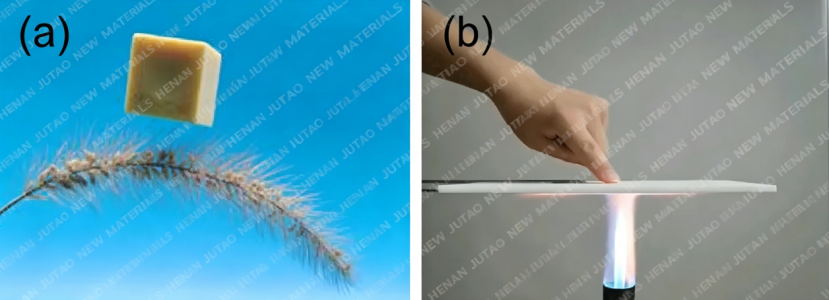
Among modern insulation technologies, Vacuum Insulation Panels (VIPs) stand out for their ultra-thin structure and exceptional thermal insulation performance. Despite being only a few millimeters thick, VIPs can achieve insulation performance comparable to much thicker traditional materials.
So how do Vacuum Insulation Panels work? Why are they considered the next-generation solution for low-energy thermal insulation?
This article explains the working principle, structure, advantages, and applications of VIP technology.
What Is a Vacuum Insulation Panel (VIP)?
A Vacuum Insulation Panel (VIP) is a high-efficiency thermal insulation material that significantly reduces heat transfer by creating a vacuum environment inside the panel.
Compared with traditional insulation materials, VIPs offer:
* Extremely low thermal conductivity
* Thin profile and lightweight design
* Excellent energy-saving performance
* Space-saving advantages
VIPs are widely used in:
* Building insulation
* Refrigerators and freezers
* Cold chain transportation
* Industrial thermal insulation
* New energy applications
How Heat Transfer Works
To understand the insulation mechanism of VIPs, it is important to first understand the three main forms of heat transfer.
Thermal Conduction
Heat transfers through solid materials or direct contact between objects.
Thermal Convection
Heat is transferred through the movement of fluids such as air or water.
Thermal Radiation
Heat is emitted through electromagnetic waves.
Traditional insulation materials mainly rely on trapped air to reduce heat conduction and convection. However, improving insulation performance usually requires increasing material thickness.
VIP technology takes a completely different approach by minimizing all three heat transfer methods simultaneously.
Core Structure of a Vacuum Insulation Panel
A typical VIP consists of three key components:
- Core Material
The core material acts as the supporting structure of the panel and prevents collapse under vacuum conditions.
Common core materials include:
* Fumed silica
* Fiberglass
* Open-cell polyurethane foam
Among them, fumed silica is considered the highest-performance option due to its nano-porous structure and excellent thermal stability.
- Barrier Film
The barrier film is the outer protective layer of the VIP.
It is usually made of multilayer metallized and polymer composite films with excellent:
* Gas barrier performance
* Moisture resistance
* Mechanical strength
The barrier film plays a critical role in maintaining the internal vacuum and ensuring long-term insulation performance.
- Vacuum Space
After the core material is sealed inside the barrier film, the internal air is evacuated to create a high-vacuum environment.
The internal pressure is typically reduced to below 1 Pa, which is approximately one ten-thousandth of atmospheric pressure.
This vacuum environment is the key to the exceptional thermal insulation performance of VIPs.
The Working Principle of VIPs
Once the air inside the panel is removed, the VIP significantly reduces all major forms of heat transfer.
Eliminating Thermal Convection
Because most air molecules are removed, there is almost no medium left for convection heat transfer.
As a result, thermal convection is nearly eliminated.
Minimizing Thermal Conduction
The vacuum environment greatly increases the distance between remaining gas molecules, dramatically reducing molecular collisions and heat conduction.
At the same time, the nano-porous core material further limits heat transfer.
Reducing Thermal Radiation
Nano-scale particles and infrared opacifiers inside the core material help scatter and reflect thermal radiation, further reducing heat transfer.
Outstanding Thermal Performance
By minimizing conduction, convection, and radiation simultaneously, VIPs achieve extremely low thermal conductivity values.
Typical thermal conductivity:
* 0.002–0.004 W/(m·K)
This means:
* A 20–30 mm VIP panel can provide insulation performance comparable to:
* 100 mm EPS foam
* 50–80 mm polyurethane foam
This allows manufacturers and builders to save valuable installation space while achieving superior insulation performance.
Advantages of Vacuum Insulation Panels
Excellent Energy Efficiency
VIPs significantly reduce heat loss and energy consumption.
Space-Saving Design
Their ultra-thin structure increases usable internal space, especially in:
* Refrigerators
* Cold storage systems
* Compact buildings
Lightweight and High Performance
VIPs provide superior insulation without adding excessive weight or thickness.
Wide Range of Applications
Home Appliances
* Refrigerators
* Freezers
* Water heaters
Construction Industry
* External wall insulation
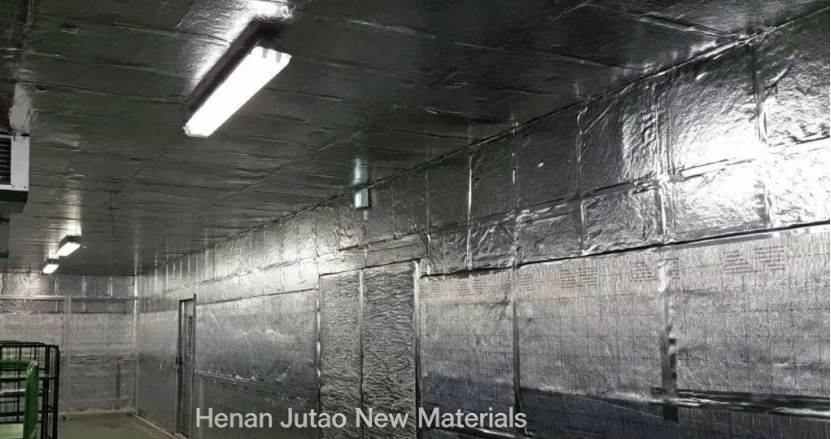
* Cold storage rooms
* Energy-efficient buildings
* Renovation projects
Cold Chain Logistics
* Insulated boxes
* Refrigerated vehicles
* Vaccine transportation
* Fresh food logistics
Emerging Industries
* EV battery thermal management
* Outdoor equipment
* Aerospace applications
Important Considerations
Although VIPs offer excellent insulation performance, several factors should be considered during use.
Avoid Puncture Damage
If the barrier film is damaged, air can enter the panel and significantly reduce insulation performance.
Edge Thermal Bridge Effect
The sealed edge area may have slightly higher thermal conductivity than the center area.
Proper design and installation can help minimize this effect.
Higher Initial Cost
Compared with traditional insulation materials, VIPs have higher manufacturing costs due to advanced materials and production technology.
However, the long-term energy savings and space efficiency often offset the initial investment.
Conclusion
Vacuum Insulation Panels are not simply an upgraded insulation material — they represent a breakthrough thermal insulation technology based on advanced physical principles.
With ultra-low thermal conductivity, lightweight design, and excellent energy-saving performance, VIPs are becoming an ideal solution for modern low-energy applications.
As technology continues to improve and production costs gradually decrease, VIPs are expected to play an increasingly important role in future sustainable construction, cold chain logistics, and energy-efficient systems.
If you are looking for a high-performance insulation solution for your project, Vacuum Insulation Panels may be the perfect choice for achieving superior thermal efficiency and long-term energy savings.
Jutao Environmental Technology — Specialists in Aerogel Material Solutions
Stay connected with us for the latest updates, industry insights and application solutions in the aerogel sector.