













Custom China Aerogel Board:What Types of Thermal Insulation Materials Are There?
Types of Thermal Insulation Materials
Thermal insulation materials are essential in building decoration and construction, providing heat preservation in winter and heat insulation in summer. Insulation materials are generally classified into three main categories: porous materials, heat-reflective materials, and vacuum insulation materials.
- Porous Insulation Materials
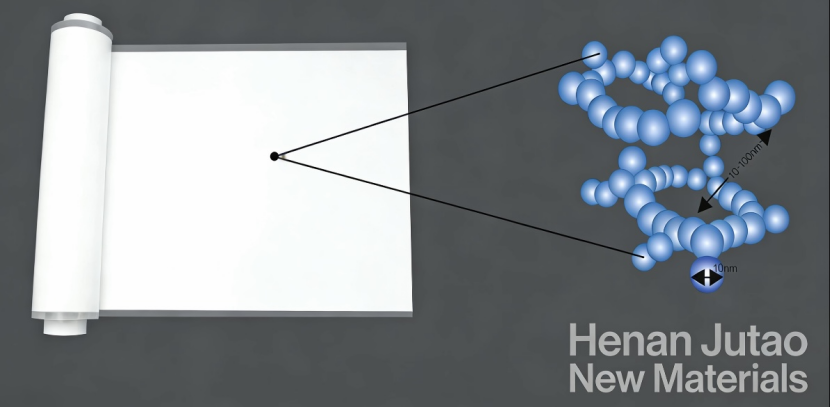
Porous materials achieve thermal insulation by utilizing the pores contained within the material itself. The air or inert gas trapped in these pores has very low thermal conductivity, thereby reducing heat transfer. Typical examples include foam materials and fibrous materials.
Aerogel nano insulation films also belong to this category of porous materials.
- Vacuum Insulation Materials
Vacuum insulation materials rely on an internal vacuum structure to block convective heat transfer, thus achieving excellent insulation performance. In the aerospace industry, insulation materials are subject to extremely strict requirements regarding weight and volume, and they are often also required to provide sound insulation, vibration damping, and corrosion resistance.
Different aircraft have different insulation needs. In aircraft cabins and cockpits, foam plastics, ultra-fine glass wool, high-silica cotton, and vacuum insulation panels (VIPs) are commonly used for thermal insulation.
- Heat-Reflective Insulation Materials
Heat-reflective materials reduce heat transfer by reflecting thermal radiation, operating on a principle similar to the reflective inner lining of a vacuum flask. In the early stages, the insulation materials used in missile external structures were mainly phenolic foam plastics. With the application of polyurethane foam plastics with improved heat resistance, insulation systems evolved from single-layer materials into sandwich structures.
For missile instrument compartments, the insulation method involves coating the outer skin of the compartment with a foaming coating several millimeters thick. At normal temperatures, this layer serves as an anti-corrosion coating; when aerodynamic heating exceeds 200 °C, it foams uniformly and provides thermal insulation.
Artificial satellites operate in environments with alternating high and low temperatures and therefore require multi-layer insulation materials with high reflectivity. These materials generally consist of dozens of layers of aluminum-coated films, such as aluminum-coated polyester films and aluminum-coated polyimide films.
In addition, the successful development of surface thermal protection tiles has effectively solved the thermal insulation challenges of space shuttles and also marks a higher level in the development of thermal insulation materials.
Jutao Environmental Technology — Specialists in Aerogel Material Solutions
Stay connected with us for the latest updates, industry insights and application solutions in the aerogel sector.