












Core Material, Barrier Film and Service Life: A Technical and Durability Analysis of Vacuum Insulation Panels (VIPs)
The performance of vacuum insulation panels (VIPs) depends on three key elements: the core material, the barrier film, and the resulting service life. A clear understanding of these factors is essential for the correct selection and evaluation of VIP products.
- Performance Comparison of Core Materials
The core material provides mechanical support to help the barrier film withstand atmospheric pressure, while also forming the structural basis for thermal insulation.
- Fumed Silica
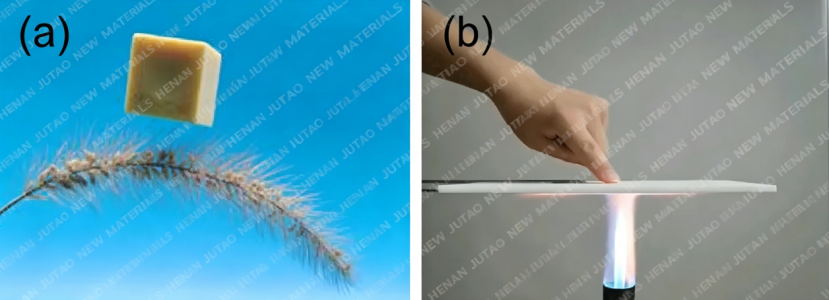
Fumed silica is currently the core material with the best overall performance. Its nano-scale pore structure effectively suppresses gas conduction and radiative heat transfer. In addition, it is non-combustible and suitable for a wide temperature range, making it the most widely used core material in VIP applications.
- Glass Fibre
Glass fibre cores are relatively low in cost, but under long-term pressure the fibrous structure may exhibit slight settlement risks. Their ability to block radiative heat transfer is also somewhat inferior to that of fumed silica.
- Polyurethane (PU) Foam
As an early-generation core material, polyurethane foam tends to release gases under vacuum conditions, which negatively affects the maintenance of vacuum levels. As a result, it has gradually been phased out of modern VIP applications.
- High-Barrier Films — the “Guardian” of Vacuum
The barrier film is the key factor determining the service life of a VIP. It is typically composed of multilayer polymer materials (such as PET and PE) laminated with ultra-thin aluminium foil or ceramic coatings.
- Aluminium Foil Composite Films
These films offer excellent gas barrier properties, but they cannot be bent easily and may create thermal bridges due to the presence of metal layers.
- All-Polymer Films / Ceramic-Coated Films
These films provide good flexibility and are suitable for curved or complex surfaces. They avoid metal-induced thermal bridges; however, their barrier performance and sensitivity to environmental factors must be carefully evaluated.
- Service Life and Performance Degradation
VIPs do not maintain their performance indefinitely. Over time, their insulation efficiency gradually decreases as external air—particularly water vapour and oxygen—slowly penetrates the panel.
- Permeation Mechanism
Gas molecules diffuse through the polymer layers of the barrier film and enter the panel via microscopic defects.
- Service Life Assessment
Under normal ambient conditions, VIPs are typically designed for a service life of 10 to 25 years. The actual lifespan largely depends on the water vapour transmission rate (WVTR) and oxygen transmission rate (OTR) of the barrier film—the lower these values, the better.
- Application Considerations
For long-life applications such as buildings, it is essential to select VIP products supported by long-term performance data and accelerated ageing test reports.
Jutao Environmental Technology — Specialists in Aerogel Material Solutions
Stay connected with us for the latest updates, industry insights and application solutions in the aerogel sector.