








Compression Set, Recovery and Long-Term Thickness: What Insulation Contractors Should Demand From an Aerogel Blanket Spec
The Line That Passed Inspection and Failed Two Winters Later
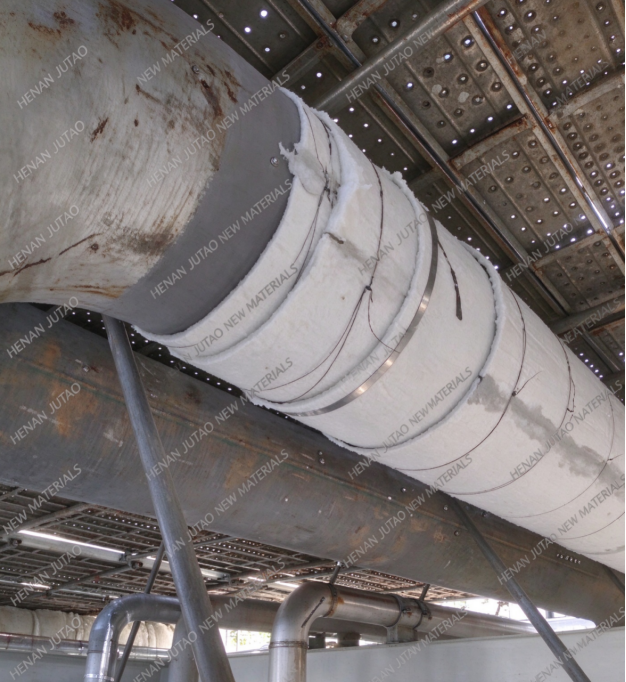
An insulation contractor on a refinery turnaround specified a ten millimetre aerogel blanket for a hot oil line, sized correctly on paper and signed off against the heat loss target. Two winters later a thermography survey found hot bands running across every pipe support and every cladding strap position, and the client asked why the insulation had "shrunk" when nobody had touched it. Nothing had shrunk. The blanket had been squeezed, and it had never come back. The specification had been written entirely around thermal conductivity at the nominal thickness, and not one line of it dealt with what happens to that thickness once a load is sitting on top of the material. That is the gap that separates a datasheet that wins a bid from an installation that still performs in year five.
Thickness Is a Performance Number, Not a Dimension
Heat loss through a blanket layer is a function of thickness as much as of conductivity, so every millimetre lost to compression is paid for twice: once in the energy bill and once in the surface temperature that the safety officer measures. Aerogel blanket is a fibrous matrix reinforced with silica, and its performance comes from the pore structure held open inside that matrix. Press the matrix and you reduce the pore volume, and conductivity rises with it. Treat the specified thickness as a guaranteed in-service value, and make the supplier state in writing what the thickness will be after a defined load is removed, not only what it is out of the roll. This single sentence in a purchase spec prevents most of the arguments that surface during a warranty survey.
What to Read on the Datasheet Before You Bid
Most contractors read thermal conductivity, service temperature and density, and stop. The three numbers that actually predict field behaviour are compression resistance, compression set and recovery. Ask for compression resistance at both ten and twenty-five percent deflection, ask for compression set after a defined dwell time at elevated temperature, and ask for a recovery figure measured after the load has been released for twenty-four hours. Where a supplier cannot produce a recovery curve, assume the worst case and add thickness.
Where the Load Actually Comes From
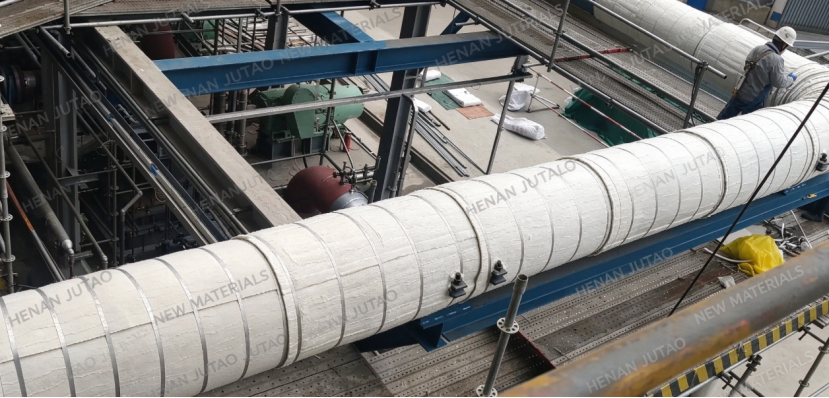
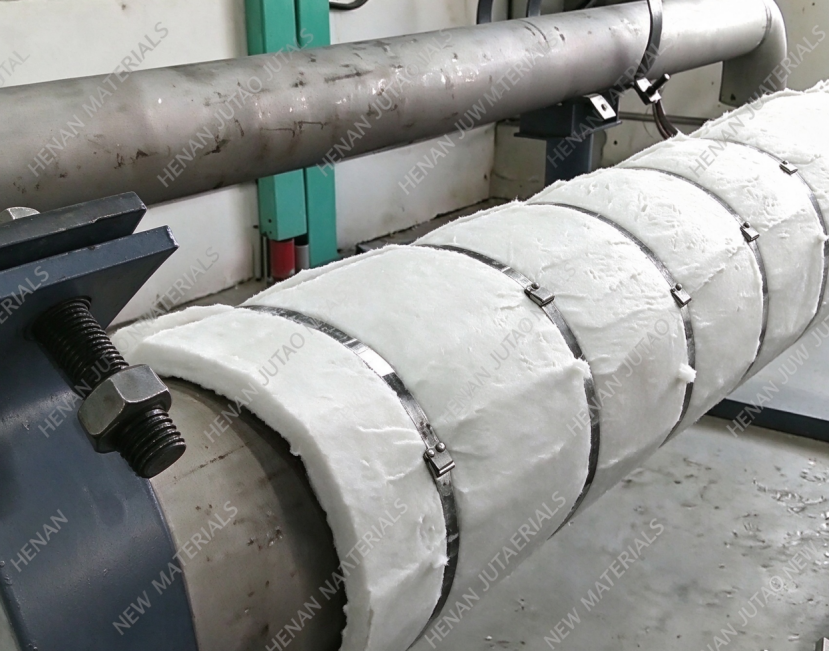
On a pipe run the blanket is rarely compressed uniformly. It is compressed in narrow bands. Pipe shoes, hanger clamps, U-bolts, guide lugs, cladding straps pulled tight with a tensioning tool and the foot traffic of the crew who installed it all create localised pressure far above anything the datasheet contemplates. A strap tensioned a quarter turn too far can cut several millimetres out of a soft layer and leave a permanent groove that shows up on the next thermal image. The answer is not a harder blanket, because hardness trades against conformability around valves and flanges; the answer is a detail that keeps the load off the insulation. Specifying a cradle or a high-density insert at every support point costs a fraction of one re-insulation visit.
The Recovery Rule Nobody Writes Down
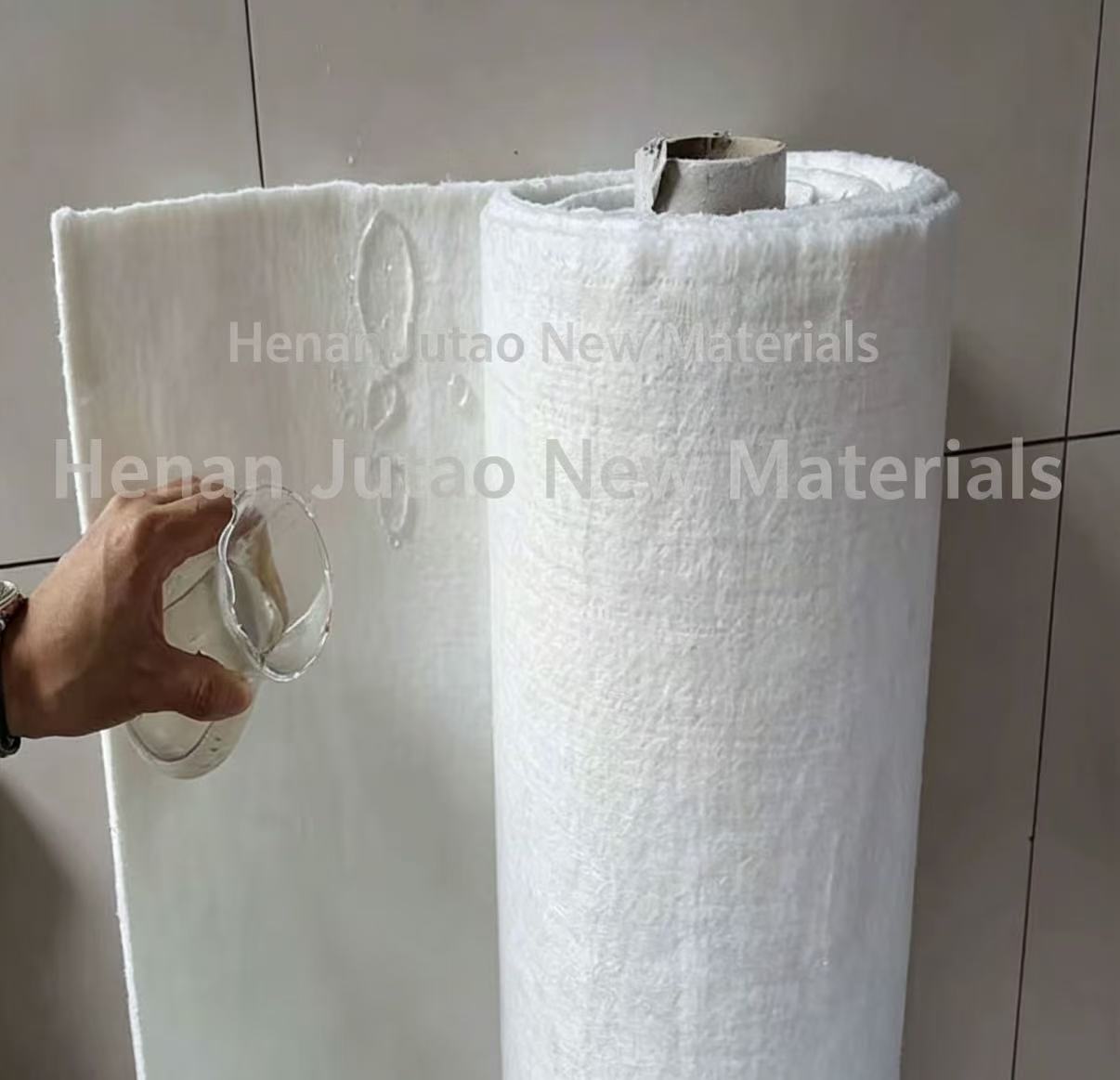
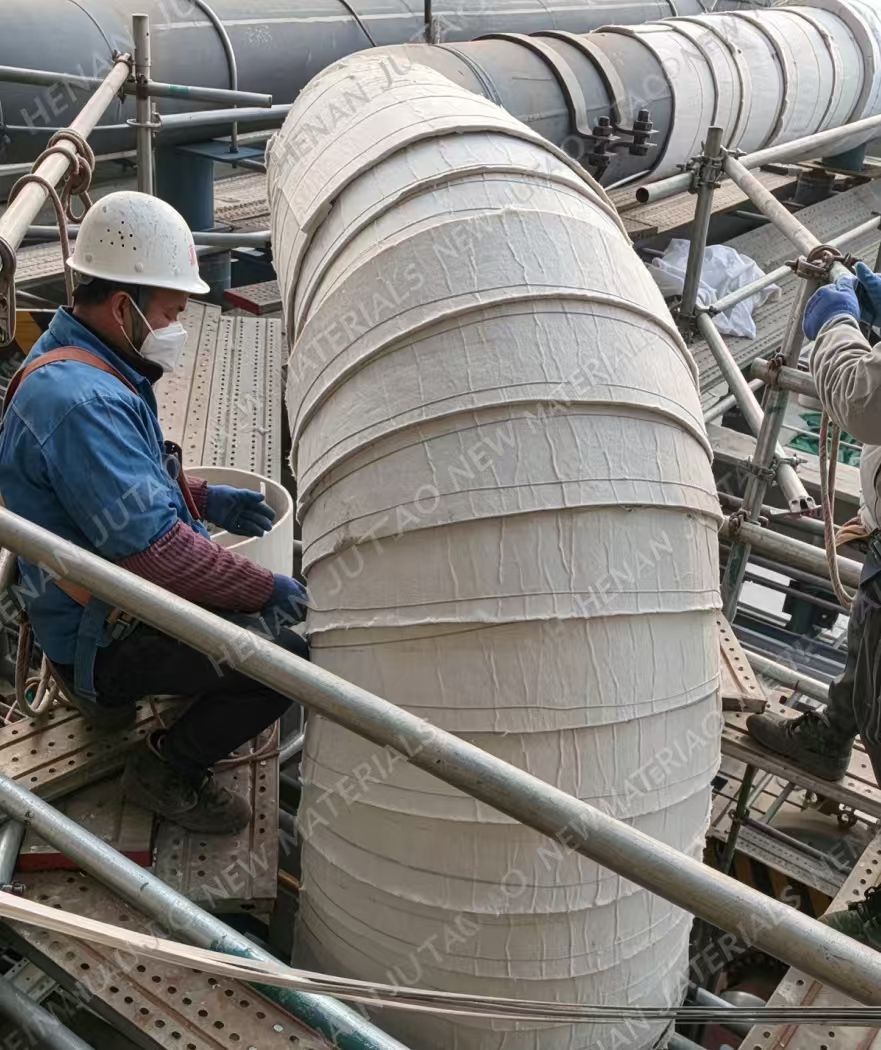
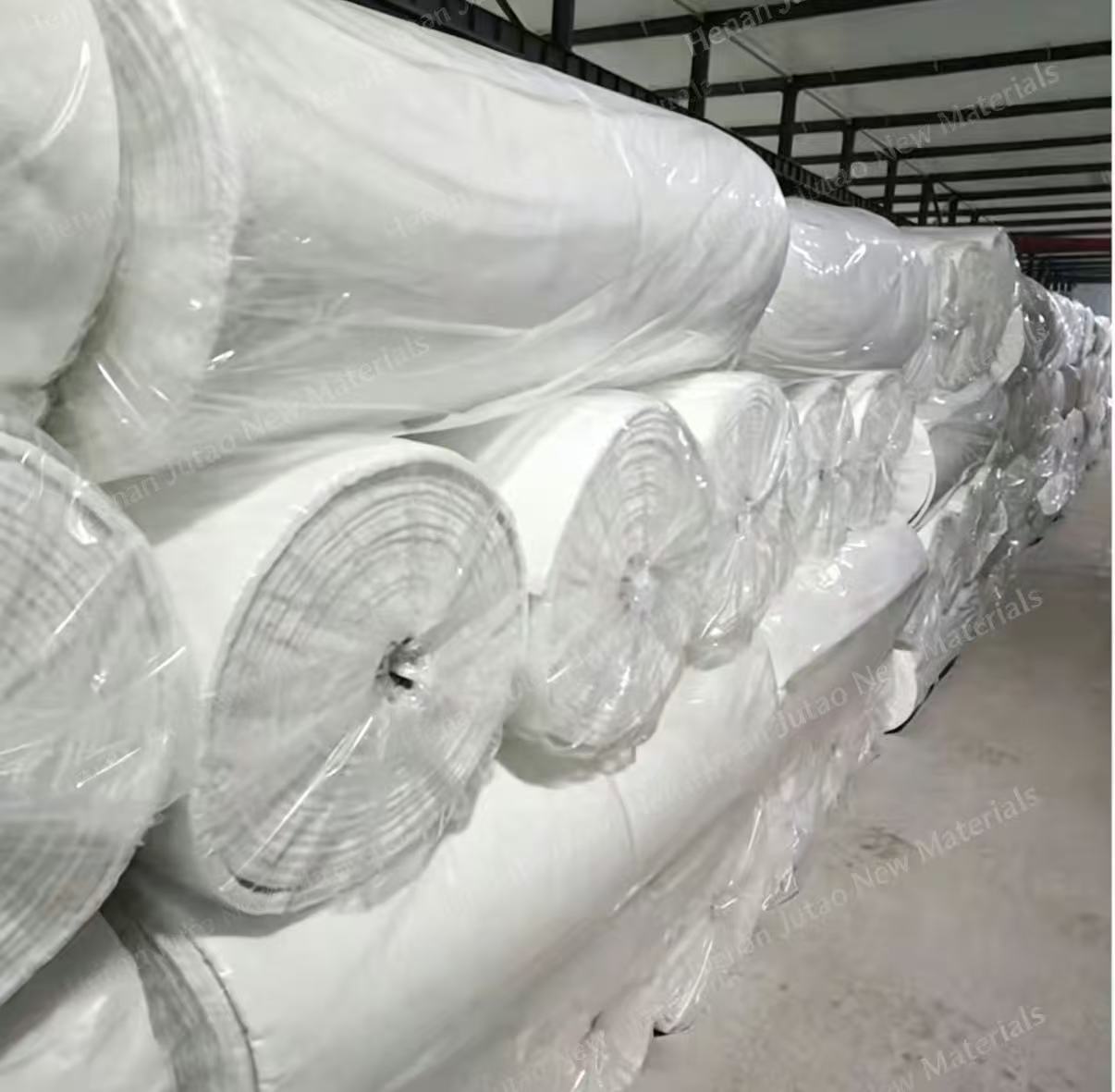
Blanket that arrives on a pallet has been stacked, strapped and container-shipped, and it does not spring back the moment the banding is cut. Build a conditioning step into the method statement: unroll, lay flat, and give the material a defined recovery period at ambient temperature before cutting and fitting, because a blanket cut while it is still compressed will be fitted short. This matters most on multi-layer build-ups, where a shortfall in the inner layer is inherited by every layer above it. An OEM aerogel insulation blanket supplied for general thermal insulation service should be handled the same way on site regardless of whose brand is on the wrapper, and the installer should be told so in writing.
Compression Behaviour Differs by Format
Not every aerogel product in the same catalogue behaves alike under load. A low thermal conductivity aerogel insulation blanket built for building insulation is engineered for a different duty cycle than a product destined for a vibrating process line, and the bonding system reflects that. When the specification covers a building envelope application with no mechanical load beyond fixings, recovery matters less and dimensional stability matters more. Where the same project includes both building and process work, write two separate clauses rather than one generic one, or the process side will be specified to the lighter standard.

Panels Carry Load, Blanket Does Not
Where a detail genuinely has to carry a load, change the product rather than fighting the material. An aluminium foil faced aerogel insulation panel from the JTA series for industrial applications gives a rigid face that spreads a point load instead of concentrating it. Use rigid panels at supports, under walkways and at every point where maintenance staff will stand or kneel, and keep the flexible blanket for the curved and irregular surfaces where only a flexible product will fit. Mixing formats inside one specification is normal engineering practice, not a complication.
When the Structure Itself Is the Load Path
Some applications ask the insulation layer to sit inside a structural build-up, and there the compression question moves into the design stage. A customised aerogel structural sandwich panel from the JTS series is made to be part of a load-bearing assembly, which is a completely different design conversation from wrapping a pipe. Never substitute a flexible blanket into a detail that was drawn for a structural panel on the grounds that they share a conductivity figure, because the mechanical behaviour is not comparable and the failure will be blamed on the insulation supplier. If the drawing shows a panel, quote a panel.
Cold Service Has the Same Problem in Reverse
Compression is not only a hot line issue. On chilled water and refrigeration the squeezed band becomes a condensation site, and water ingress into a compressed layer is far harder to dry out than water on the surface. An advanced thermal insulation aerogel blanket specified for cold insulation duty should carry the same recovery requirements, plus a vapour retarder that is not itself tensioned into the insulation. On cold service, a compression groove becomes a water trap, and a water trap becomes corrosion under insulation, which is a repair bill rather than a maintenance item.
An Acceptance Test You Can Run on Site
You do not need a laboratory to protect yourself. Take a sample from the delivered batch, measure the thickness at three points under a defined hand load, load it with a known weight for an hour, release it, and measure again after twenty-four hours; record the before and after numbers against the purchase specification. Do it once per delivery, photograph it, and file it with the material certificates. If the recovered thickness falls short of the specified value, the time to discover that is before the cladding goes on, not after the client's thermographer finds the stripes.