



News










0102030405
Choose Wisely: Aerogel vs VIP Panels – Complete Comparison
2026-06-29
In high-end building energy efficiency, industrial pipe insulation, new energy battery thermal management, cold chain logistics and other fields, traditional insulation wool can no longer meet the demand for thin-layer high-efficiency thermal insulation. Currently, the two most widely used super-insulation materials in international engineering and procurement are #Aerogel Insulation Blanket and #Vacuum Insulation Panel (VIP Panel). Both feature thermal conductivity far lower than traditional materials, yet differ significantly in physical form, installation methods and applicable scenarios. This article compares technical parameters, advantages, disadvantages and typical applications to help you decide when to choose aerogel and when to select VIP panels.
Core Parameter Comparison: Aerogel Insulation Blanket vs. Vacuum Insulation Panel
| Performance Indicator | Aerogel Insulation Blanket | Vacuum Insulation Panel (VIP Panel) |
|---|---|---|
| Thermal Conductivity | < 0.018 W/m·K | < 0.005 W/m·K |
| Physical Form | Flexible blanket or roll, bendable and cuttable | Rigid flat panel, cannot be cut or bent on-site |
| Fire Rating | Class A non-combustible (inorganic silica-based) | Depends on barrier film; usually requires additional fireproof layer |
| Temperature Resistance | -200℃ to +650℃ (varies by model) | Typically -40℃ to +80℃; slightly wider for special core materials |
| Moisture Resistance | Hydrophobic, resists moisture penetration | Sealed barrier film; performance drops sharply after vacuum failure |
| Installation Difficulty | Low; can wrap valves, flanges and irregular surfaces | Medium to high; puncture prevention and edge sealing required |
| Service Life | Long-term stable, unaffected by vacuum | Depends on vacuum retention; generally 10–25 years |
| Typical Thickness | 3mm / 6mm / 10mm and other thin specifications | Usually 15mm–50mm ultra-thin profiles |
Data sourced from industry-standard technical specifications and manufacturer public parameters.
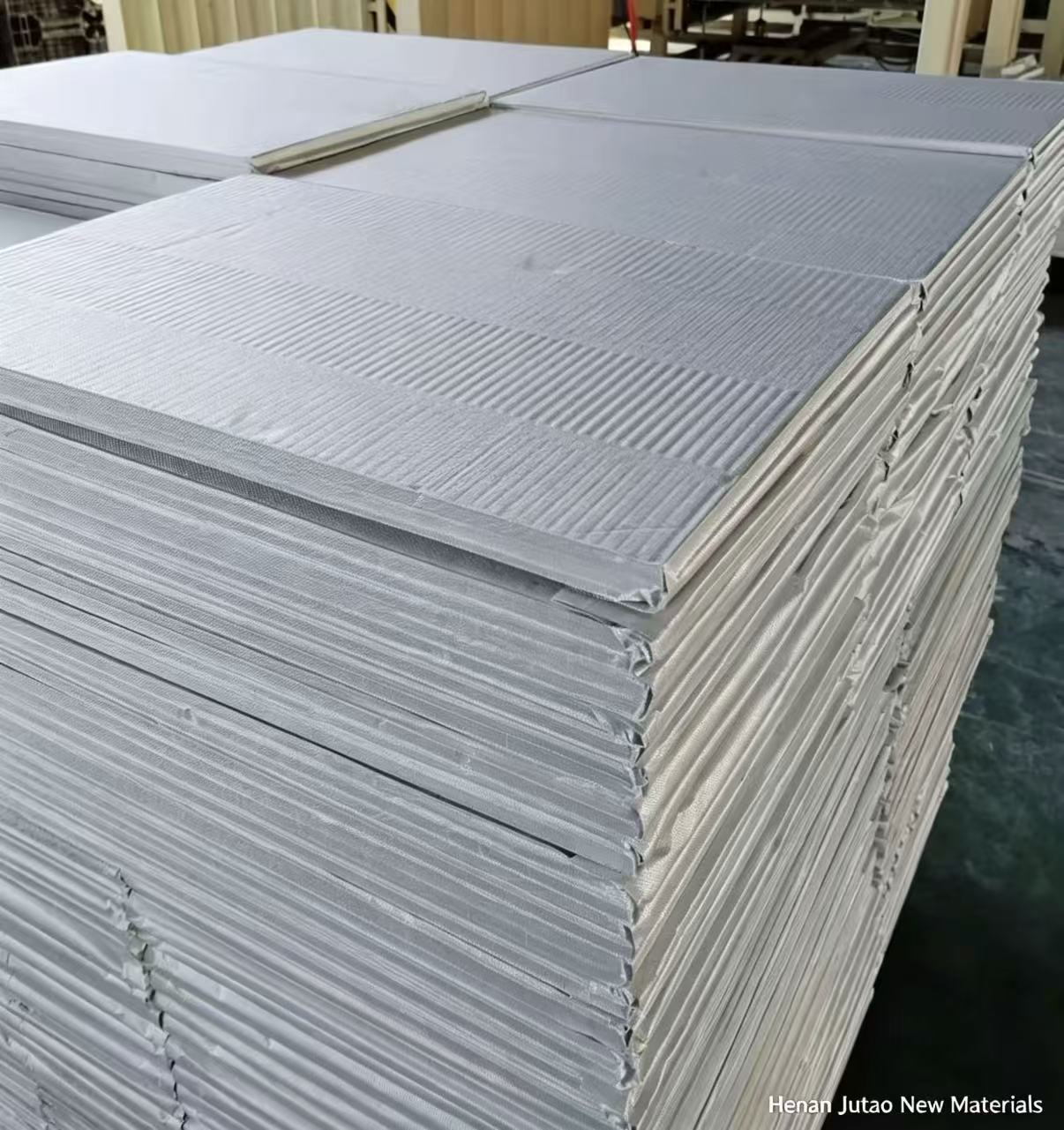
Features & Recommended Applications of #Aerogel Insulation Blanket
Aerogel is an ultra-lightweight solid material with a nanoporous structure, reinforced with glass fiber or ceramic fiber to form a flexible blanket. The biggest advantages of aerogel insulation blanket are flexibility & cuttability, hydrophobicity & fire resistance, wide temperature tolerance, and stability independent of vacuum integrity.
When to Choose Aerogel Insulation Blanket
-
Industrial pipe, tank, valve & flange insulation For high-temperature steam pipelines in petrochemical, metallurgical and power plant industries with complex shapes, flexible aerogel blankets tightly cover elbows and flanges to eliminate thermal bridges and maintain stable performance under long-term high temperatures.
-
Thermal insulation between new energy power battery modules Thin aerogel sheets placed between battery cells leverage Class A fire resistance and high-temperature stability to suppress thermal runaway propagation, making it one of the mainstream solutions for EV battery packs.
-
Building curtain wall, roof & exterior wall thin-layer insulation retrofits For renovation projects with limited exterior wall thickness requiring improved U-values, millimeter-scale aerogel composite panels enhance thermal performance without extra space, while delivering weather resistance and hydrophobicity to avoid moisture degradation.
-
Humid or outdoor exposed environments High hydrophobicity allows consistent insulation performance even with minor moisture contact, ideal for offshore platforms, underground pipe corridors and other humid working conditions.
Limitations: Higher cost per unit area than traditional insulation wool; slightly higher thermal conductivity than VIP at equal thickness.
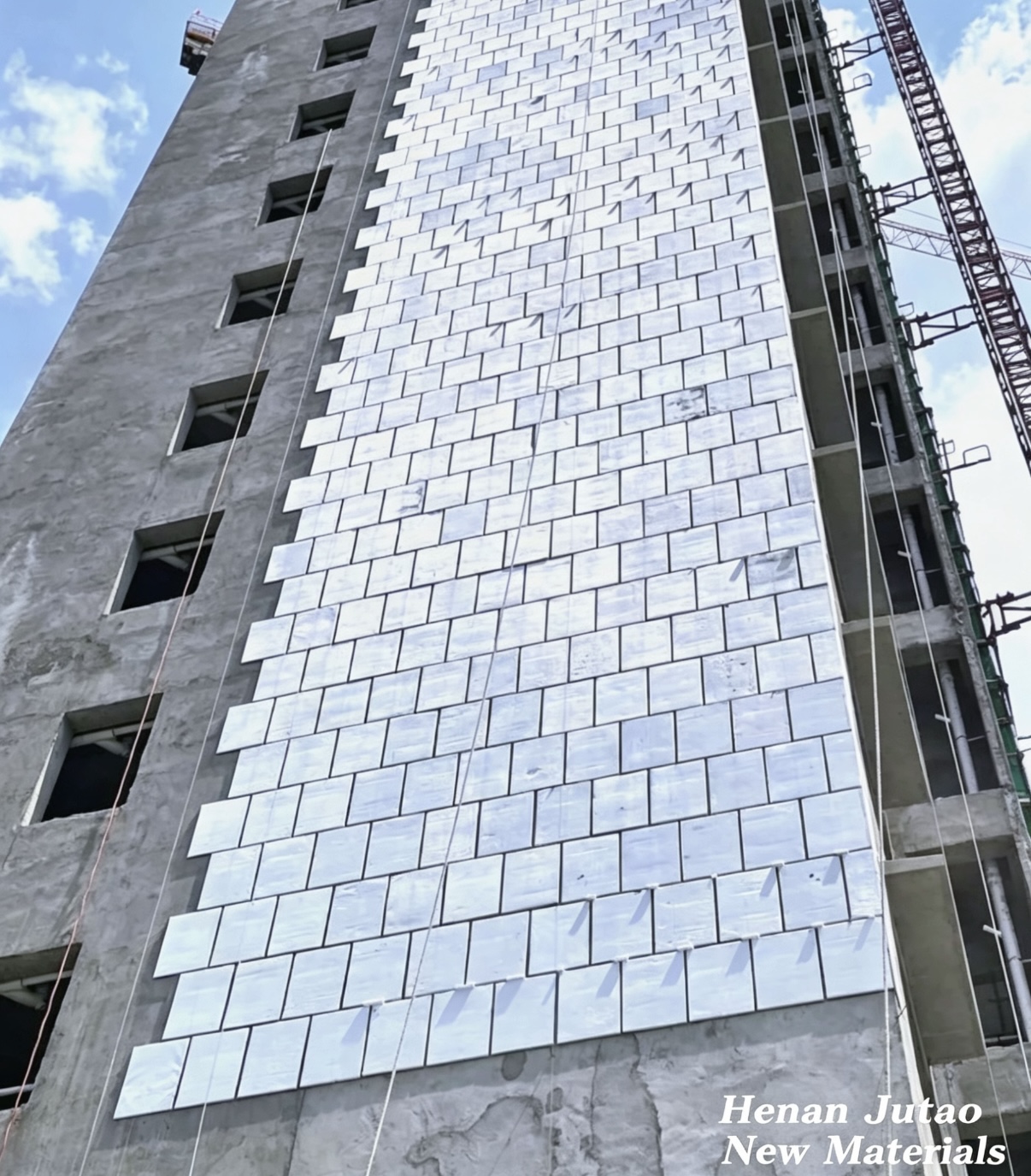
Features & Recommended Applications of #Vacuum Insulation Panel (VIP Panel)
VIP panels consist of porous core materials (typically fumed silica or glass fiber) encapsulated in high-barrier films under vacuum conditions. By nearly eliminating gaseous conduction and convection, vacuum insulation panels provide the highest R-value among commercial insulation materials at the same thickness.
When to Choose VIP Panel
-
Space-critical refrigeration & freezing equipment For commercial freezers, medical refrigerators and high-end household appliances where internal volume is valuable, 20–30mm thick VIP panels achieve insulation equivalent to over 100mm of traditional PU foam, maximizing usable internal space.
-
Cold chain logistics boxes & pharmaceutical temperature-controlled transport containers Embedding VIP in passive insulation boxes greatly extends passive cold retention duration and reduces dry ice or battery consumption.
-
Embedded insulation in prefabricated building thin walls When total exterior wall thickness of modular buildings is restricted by transportation dimensions, VIP can be used as local high-efficiency insulation inserts for flat areas, with proper edge thermal bridge treatment and puncture protection.
-
Constant temperature & humidity enclosures for precision instruments Laboratory equipment with strict limits on overall wall thickness.
Important notes: VIP panels must not be drilled or bent on-site; puncturing the barrier film destroys the vacuum and renders insulation ineffective. Long-term reliability depends on edge-sealing technology and gas permeability of barrier films. Design should include safety margins and avoid impact from sharp objects.
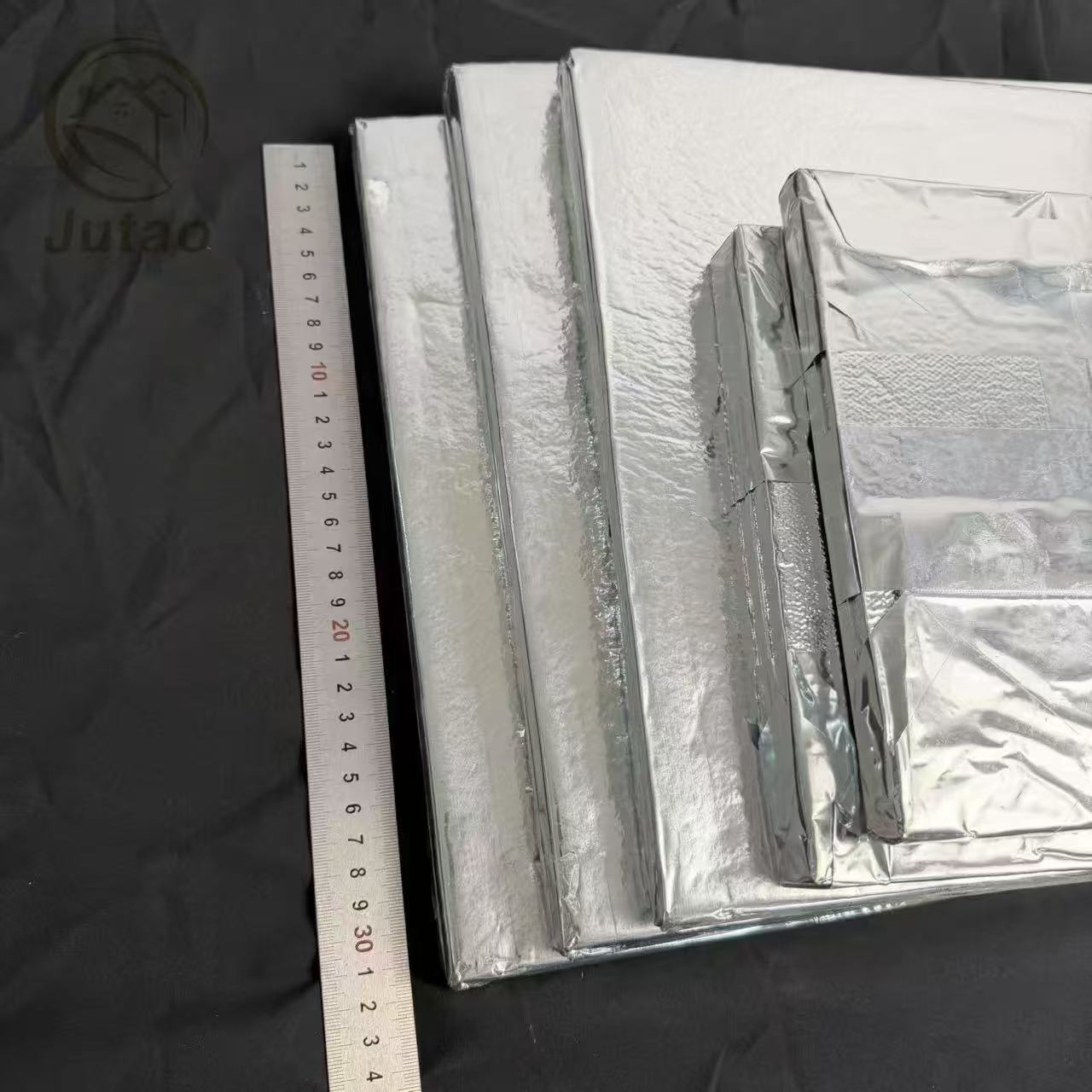
3 Key Questions for Engineering Procurement Decisions
International buyers typically narrow selections using three critical project criteria:
-
Is the installation surface flat & regular? Irregular curved surfaces, pipes or valves → prioritize #Aerogel Blanket; Large flat walls or equipment interiors → consider #VIP Panel.
-
Is there puncture risk or on-site cutting required? Complex construction sites with on-site trimming → aerogel blanket is more suitable; Factory-precut sizes with protective housings → VIP is feasible.
-
Operating in continuous high temperature or humid conditions? Sustained temperatures >200℃ or potential moisture exposure → aerogel; Low-temperature, dry and closed cavities → VIP maximizes thin-layer insulation performance.
Many advanced systems adopt a hybrid approach: aerogel sheets between cells block thermal runaway, while VIP inserts in the outer battery pack maintain optimal operating temperatures.