













China Custom Aerogel U Value JUTAO New Materials Explains the Application of Aerogel in Industrial Thermal Insulation
In industrial systems, the thermal insulation performance of equipment and pipelines has a direct impact on energy efficiency, operational safety, and maintenance costs. With increasingly stringent energy-saving requirements across industries, traditional insulation materials are gradually showing limitations under high-temperature and complex operating conditions, such as excessive thickness, high heat loss, and limited service life.
As a new generation of high-performance thermal insulation material, aerogel has gained increasing attention and application in industrial insulation systems in recent years, becoming an important option for demanding operating environments.
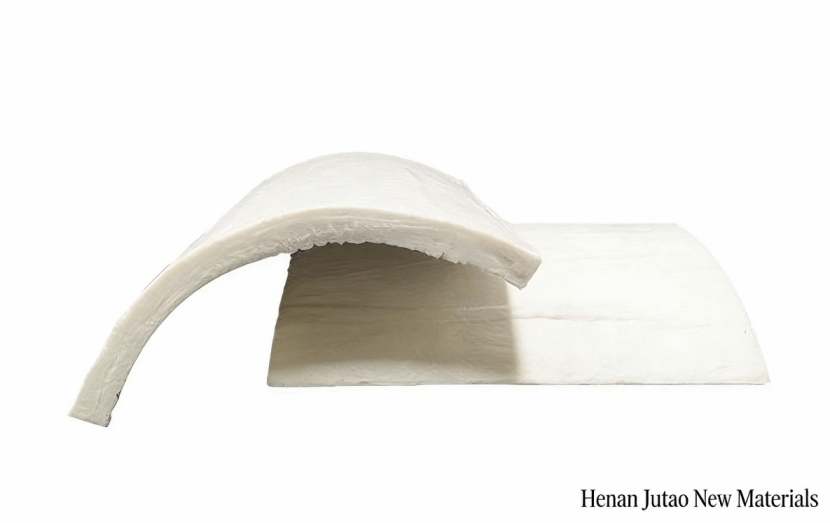
- What Is Aerogel Thermal Insulation Material?
Aerogel is a solid material composed of a nano-scale porous structure. Its internal pores are filled with stationary air, while the solid framework accounts for only a very small proportion of the total volume. This unique structure gives aerogel the following characteristics:
- Extremely low thermal conductivity
- Very low bulk density
- Excellent performance stability over a wide temperature range
In industrial applications, aerogel is commonly supplied in the form of aerogel blankets or aerogel composite blankets, which are suitable for wrapping pipes and insulating equipment surfaces.
- Core Requirements for Industrial Thermal Insulation Materials
Compared with residential or commercial buildings, industrial systems impose higher and more complex requirements on insulation materials, including:
- Low thermal conductivity to minimise energy losses
- Stable performance under high-temperature or cryogenic conditions
- Effective insulation performance under limited thickness conditions
- Long-term durability without ageing, powdering, or detachment
- Adaptability to complex pipe networks and equipment geometries
Aerogel insulation materials have been introduced into industrial insulation systems precisely to address these requirements.
- Main Application Scenarios of Aerogel in Industrial Insulation
3.1 Industrial Pipeline Insulation
In industries such as oil & gas, chemical processing, power generation, and metallurgy, large quantities of high-temperature or low-temperature media are transported through pipelines. Thanks to its ultra-low thermal conductivity, aerogel blankets can significantly reduce insulation thickness while achieving the same thermal performance. Typical applications include:
- High-temperature steam pipelines
- Thermal oil pipelines
- LNG and other cryogenic media pipelines (often in composite insulation systems)
Aerogel is particularly advantageous in space-restricted areas or densely arranged pipe systems.
3.2 Insulation of Industrial Equipment and Vessels
For equipment such as reactors, storage tanks, and heat exchangers, conventional insulation materials often require substantial thickness, increasing equipment size and structural load. The use of aerogel insulation can:
- Reduce surface heat dissipation
- Lower external wall temperatures
- Improve overall thermal efficiency
The flexible blanket form also allows easy installation on irregular or complex surfaces.
3.3 High-Temperature Industrial Systems
Within specified temperature ranges, aerogel materials can maintain structural stability and are suitable for certain medium- to high-temperature industrial systems, such as:
- Auxiliary insulation layers for industrial furnaces
- Thermal insulation layers for heat-processing equipment
- Insulation of high-temperature valves and flanges
In these applications, aerogel is often used as part of a composite insulation system in combination with other high-temperature-resistant materials.
3.4 Industrial Energy-Saving Retrofit Projects
Energy-efficiency retrofit projects in existing industrial systems often face challenges such as:
- Limited installation space
- Inconvenience of large-scale dismantling or reconstruction
- Higher insulation performance requirements
Aerogel insulation can significantly improve thermal performance without a substantial increase in thickness, making it well suited for energy upgrades and local optimisation projects.
- Performance Advantages of Aerogel in Industrial Insulation
- Low Thermal Conductivity
The nano-porous structure of aerogel effectively suppresses heat transfer by conduction, convection, and radiation, ensuring stable insulation performance under industrial operating conditions.
- Significant Thickness Reduction
To achieve equivalent insulation performance, aerogel typically requires a much smaller thickness than traditional fibrous insulation materials, helping to reduce space occupation.
- Adaptability to Complex Operating Conditions
Aerogel blankets offer good flexibility, allowing them to wrap bends, valves, and other complex components, thereby reducing thermal bridges.
- Key Considerations for Industrial Application
Despite its outstanding performance, aerogel insulation should be selected and applied rationally in industrial projects:
- Cost considerations: Compared with conventional insulation materials, aerogel has a higher unit cost and is therefore best applied to critical or high-demand areas
- Installation standards: Appropriate protective layers should be used to prevent mechanical damage
- Operating condition matching: Different temperature ranges require the selection of suitable aerogel specifications
Proper system design and combined application strategies are essential to fully realise the advantages of aerogel.
- Relationship Between Aerogel and Traditional Industrial Insulation Materials
In practical engineering applications, aerogel is not intended to completely replace conventional insulation materials. Instead, it is more commonly used as:
- A performance-enhancing solution for critical insulation areas
- An optimisation solution for space-limited applications
- A key material for industrial energy-saving retrofits
This combined application approach helps to balance performance requirements with overall project costs.
Conclusion
The application of aerogel in industrial thermal insulation is mainly reflected in its high insulation efficiency, reduced insulation thickness, and strong adaptability to complex operating conditions. In scenarios such as industrial pipelines, equipment insulation, and energy-efficiency retrofits, aerogel provides a new technical pathway for improving overall thermal performance. With appropriate material selection and standardised installation, aerogel can deliver stable and long-lasting performance within industrial insulation systems.
Jutao Environmental Technology — Specialists in Aerogel Material Solutions
Stay connected with us for the latest updates, industry insights and application solutions in the aerogel sector.