



Industry News










0102030405
Best Aerogel Types for Oil & Gas Applications: A Procurement Guide
2026-07-28
Industry Snapshot: Thermal management is mission-critical across the oil and gas (O&G) value chain. From subsea pipelines and LNG transportation to refinery process lines and petrochemical reactors, heat loss directly impacts energy efficiency, flow assurance, and operational safety. Traditional insulation materials—such as mineral wool, fiberglass, calcium silicate, and polyurethane foam—struggle with high-temperature stability, moisture ingress, and space constraints.
Aerogels, nano-porous solid materials with ultra-low thermal conductivity, have emerged as a superior alternative. However, not all aerogels are created equal. Differences in temperature resistance, hydrophobicity, mechanical strength, and total cost of ownership significantly affect performance in O&G environments. For procurement managers and project engineers, selecting the right aerogel type is a strategic decision that influences CAPEX, OPEX, and asset integrity.
This guide compares leading aerogel variants and provides a practical aerogel selection framework tailored for oil and gas buyers.
Why Aerogels Are Transforming Oil & Gas Insulation
To make informed sourcing decisions, buyers must first understand whyaerogels outperform conventional insulation in hydrocarbon applications.
The Science Behind Aerogel Performance
Aerogels derive their exceptional insulation properties from a nanoporous structure:
-
Porosity: 80%–99.8%
-
Pore size: 1–100 nm
-
Surface area: 200–1,000 m²/g
-
Density: As low as 3 kg/m³
This architecture restricts air molecule movement, suppressing convective and conductive heat transfer. The result: a room-temperature thermal conductivity of 0.012–0.020 W/m·K—far lower than traditional insulation.
Strategic Role Across the O&G Value Chain
Aerogels are deployed throughout upstream, midstream, and downstream operations:
-
Upstream: Subsea pipeline insulation, well casing thermal management, steam lines for heavy oil recovery
-
Midstream: LNG storage tanks, cryogenic transport lines, gathering pipelines
-
Downstream: Refinery process piping, petrochemical units, reactor vessels, storage tanks
Market Context: Petrochemical applications account for 56% of global aerogel demand. In 2019 alone, oil and gas applications generated $395.8 million in revenue, underscoring aerogels’ strategic importance in the energy sector.
Aerogel Types Compared: Which Is Right for Your Application?
While silica aerogels dominate today’s market, the family of aerogel materials has expanded to include oxides, carbons, and composites. Below is a buyer-focused comparison of the most relevant types for O&G projects.
Silica Aerogels: The Industry Workhorse
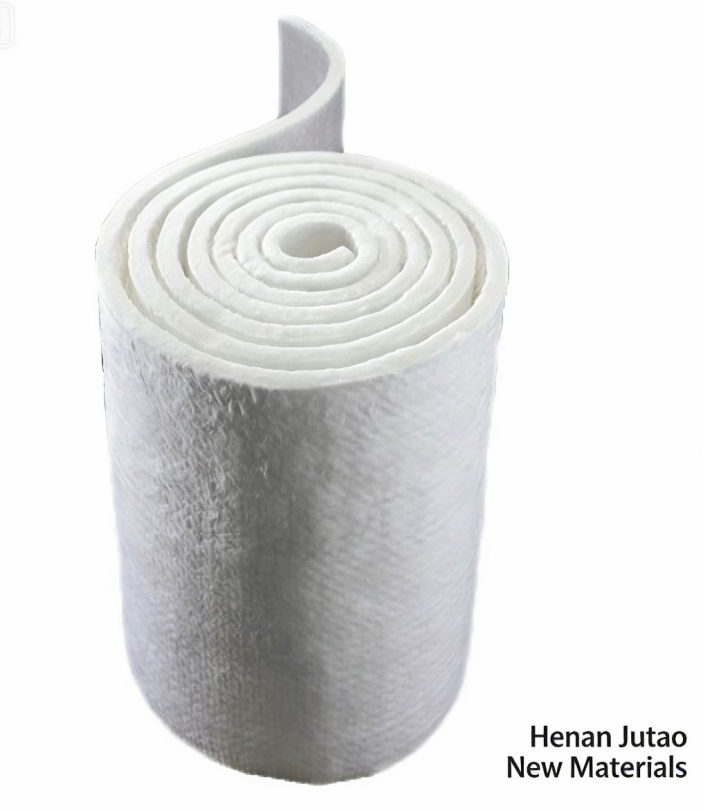
Silica aerogels represent the most mature, widely commercialized, and cost-effective solution for oil and gas insulation. They currently command ~69% of the global aerogel market share.
Advantages in Oil & Gas Environments
-
Ultra-Low Thermal Conductivity: 0.013–0.020 W/m·K at room temperature. Studies show aerogels deliver half the conductivity of fiberglass and one-third to one-fourth that of thermoplastic insulators or carbon fiber between 40–140°C.
-
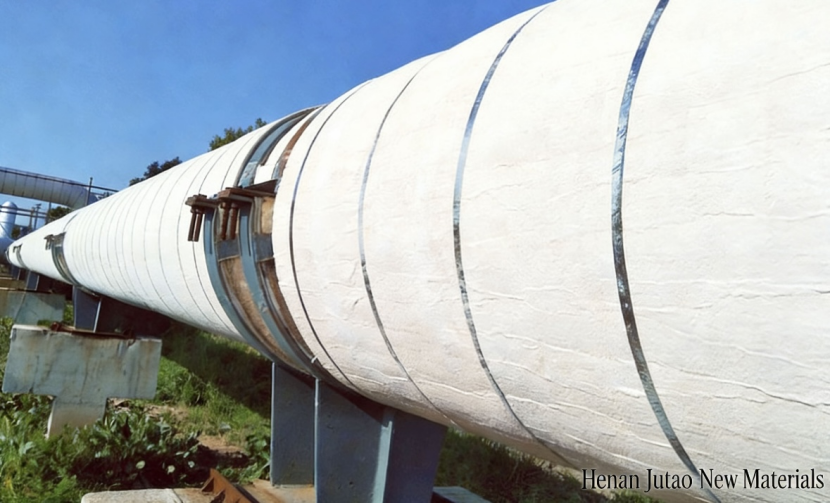
Space Efficiency: Achieve equivalent R-values at 20%–50% of the thickness required by conventional materials. In real-world projects, switching to aerogel blankets reduced cold pipe outer diameters by 24%, saving up to 1.83 tons of structural steel per meter on typical pipe racks.
-
Hydrophobic Performance: Hydrophobic grades achieve >98% water repellency, preventing moisture ingress and mitigating Corrosion Under Insulation (CUI)—a silent but costly threat in O&G facilities.
-
Breathability: Allows water vapor to escape while blocking liquid water, keeping substrates dry.
Limitations to Consider
-
Maximum Service Temperature: Typically 600–800°C for pure silica aerogels; composite versions extend this to ~1,000°C.
-
Mechanical Brittleness: Addressed through fiber-reinforced aerogel blankets, which improve flexibility and durability during handling and installation.
Typical O&G Applications
-
Refinery piping and steam lines
-
Subsea pipeline insulation
-
Tank and vessel insulation
-
Downhole thermal insulation for heavy oil recovery
Buyer Insight: For the vast majority of oil and gas insulation needs, silica aerogel blankets offer the best balance of performance, availability, and lifecycle cost.
Alumina Aerogels: High-Temperature Specialists
Alumina aerogels feature an aluminum oxide backbone and a melting point exceeding 2,000°C, making them suitable for extreme heat environments.
Advantages in Oil & Gas Environments
-
Excellent thermal stability above 1,000°C
-
Low density, high porosity, and competitive thermal insulation properties
Limitations to Consider
-
Complex synthesis (aluminum alkoxides react aggressively with water)
-
Higher production costs and limited commercial availability compared to silica aerogels
Typical O&G Applications
-
Ultra-high-temperature furnaces
-
High-temperature reactors
-
Aerospace-grade thermal protection
Procurement Guidance: Only specify alumina aerogels after confirming that process temperatures exceed the limits of silica-based systems. Al₂O₃-SiO₂ composite aerogels are an emerging middle ground, combining improved mechanical strength with robust high-temperature insulation.
Zirconia Aerogels: Ultra-High-Temperature & Catalytic Potential
Zirconia aerogels offer even greater thermal stability than alumina variants and demonstrate lower thermal conductivity at elevated temperatures. Their pore sizes are smaller than the mean free path of air molecules, effectively eliminating internal convection.
Advantages in Oil & Gas Environments
-
Among the most thermally stable oxide aerogels
-
Potential use as catalyst supports in refining processes
Limitations to Consider
-
High manufacturing cost
-
Limited commercialization and field deployment data in insulation applications
Typical O&G Applications
Currently confined to R&D and niche high-temperature projects. Not recommended as a primary insulation choice for standard O&G facilities.
Carbon Aerogels: Adsorption & Separation Specialists
Unlike oxide aerogels, carbon aerogels are carbon-based structures (e.g., resorcinol-formaldehyde, graphene, CNT aerogels) optimized for adsorption rather than passive insulation.
Advantages in Oil & Gas Environments
-
Exceptional oil and organic solvent absorption (60.4–134.5 g/g)
-
Promising role in CO₂ capture and wastewater treatment
-
Magnetic carbon aerogels show potential for oil-in-water separation
Limitations to Consider
-
Oxidize above 400°C in oxygen-rich environments
-
Unsuitable for high-temperature insulation applications
Typical O&G Applications
-
Oil spill remediation
-
Produced water treatment
-
Industrial carbon capture systems
Buyer Insight: Carbon aerogels address environmental and separation challenges, not traditional pipeline insulation. Evaluate them when specifying materials for cleanup or emissions-reduction projects.
Aerogel Selection Framework for Oil & Gas Buyers
Use this structured checklist to align aerogel specifications with project requirements:
1. Process Temperature
-
≤600–800°C: Specify hydrophobic silica aerogel blankets (optimal TCO).
-
>800°C: Evaluate alumina or Al₂O₃-SiO₂ composites; confirm budget and lead times.
2. Space & Weight Constraints
-
Offshore platforms, subsea modules, and revamp projects benefit disproportionately from aerogels’ thin-profile advantage.
-
Reduced insulation thickness lowers structural steel requirements and eases tie-ins.
3. Corrosion Under Insulation (CUI) Risk
-
Coastal, offshore, and humid environments demand >98% hydrophobic aerogels.
-
Verify third-party CUI test data before purchase.
4. Total Cost of Ownership (TCO)
-
Higher upfront material cost vs. traditional insulation is offset by:
-
20%+ reduction in heat loss at 300°C service temperatures
-
Lower maintenance costs
-
Faster installation (up to 30% time savings on large-diameter piping)
-
-
Many projects achieve payback within three years.
5. Installation Efficiency
-
Flexible aerogel blankets conform to complex geometries (elbows, valves, flanges).
-
Lightweight rolls reduce crew fatigue and crane lifts offshore.
Conclusion: Making the Optimal Aerogel Choice
For most oil and gas insulation applications, hydrophobic silica aerogel blankets remain the gold standard—balancing thermal performance, moisture resistance, fire safety, and cost-effectiveness. They are proven across subsea, refinery, and petrochemical environments worldwide.
Alumina and zirconia aerogels serve specialized ultra-high-temperature niches where silica cannot perform. Carbon aerogels address adsorption, separation, and decarbonization challenges rather than traditional insulation.
Strategic Recommendation: Start your specification process with silica aerogel systems. Clearly define operating temperature, spatial limitations, and CUI mitigation requirements with your supplier. As aerogel manufacturing scales globally, pricing continues to improve—making this advanced material increasingly accessible for mainstream O&G projects.