












Applications of Aerogels in the Fire Protection Sector
- Fire-Resistant Thermal Insulation Materials
In China’s current construction sector, external wall insulation mainly relies on organic materials such as extruded polystyrene (XPS), expanded polystyrene (EPS) and polyurethane foam (PU), as well as inorganic alternatives such as mineral wool and vitrified microbeads. Traditional organic insulation materials are generally flammable, whereas many inorganic materials have high density and are prone to losing insulation performance once they absorb moisture. This makes it difficult to simultaneously achieve both effective thermal insulation and fire resistance.
Against this challenge, researchers have increasingly proposed the use of aerogels as next-generation fire-resistant insulation materials.
- Silica (SiO₂) Aerogel Fire-Resistant Insulation
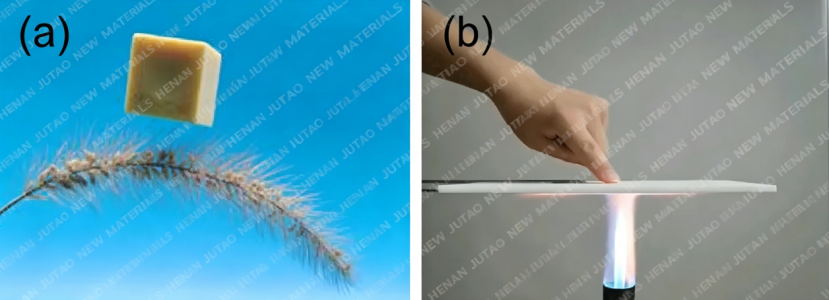
As a new class of insulation material, SiO₂ aerogel has attracted growing attention due to its unique porous structure and excellent thermal conductivity. Compared with traditional ceramic insulation layers, silica aerogels exhibit superior thermal stability under high temperatures and demonstrate remarkable fire-retardant performance, offering significant potential for use in fire-protection insulation.
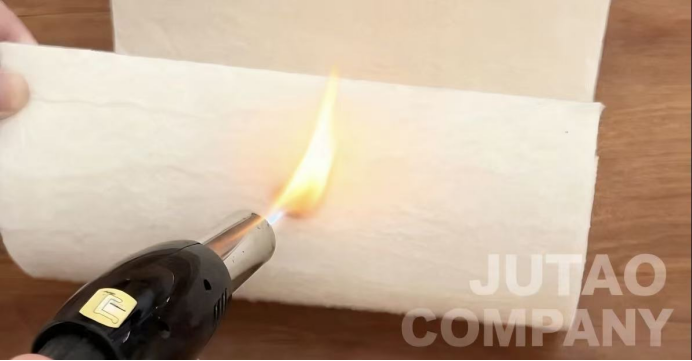
However, SiO₂ aerogels still face several challenges in practical applications. Their mechanical strength is relatively poor and they are easily damaged by external forces, which makes them susceptible to cracking when used in building façades.
To address these limitations, Cheng Kai and colleagues prepared hydrophobic silica aerogels using the sol–gel method, achieving a water contact angle of 139°. The resulting aerogels exhibited an average pore size of 16.86 nm, porosity above 96%, and a minimum thermal conductivity of 0.0274 W/(m·K), providing excellent insulation performance.
Nevertheless, hydrophobic modification increases production cost and may affect other properties, which must be taken into account during practical deployment.
Overall, the combination of low thermal conductivity and high-temperature resistance positions SiO₂ aerogels as a promising option for fire-resistant insulation. Progress in hydrophobic treatment and assembly techniques is improving the safety and stability of silica aerogels, paving the way for next-generation high-performance insulation systems. Future research should continue to strengthen their mechanical resilience and environmental adaptability to enable wider application.
- Bio-Based Aerogel Fire-Resistant Insulation
The importance of bio-based materials has grown significantly in recent years, offering renewable and environmentally friendly alternatives with application-specific performance benefits.
Cellulose, the most abundant renewable resource found in wood, bamboo, cotton and other biomass feedstocks, has shown substantial potential for use in thermal insulation.
Beyond cellulose aerogels, other bio-based aerogel systems have also made important advances.
For example, the team led by Yu Shuhong developed fully bio-derived wood-mimicking aerogels based on natural biomass and minerals. These aerogels demonstrated excellent heat insulation and fire resistance, withstanding temperatures above 1300 °C and maintaining structural integrity for over 20 minutes under direct flame exposure—an important breakthrough for fire-resistant materials.
Despite the low-carbon advantages of bio-based aerogels, their fabrication commonly involves organic solvents. The use and emission of such solvents pose environmental concerns and require effective management.
With appropriate material design and modification—such as incorporating flame retardants or adopting greener production processes—bio-based aerogels can provide high-performance and environmentally responsible insulation solutions that help raise building safety standards and reduce fire risk.
- Composite Aerogels
Composite aerogels are produced by combining aerogels of different chemistries, thereby integrating their respective advantages. Such materials can achieve balanced properties, including enhanced mechanical strength and improved fire resistance, enabling their use in more demanding environments.
Zhang Ze developed a polymethylsilsesquioxane–polyimide composite aerogel with outstanding mechanical performance and high-temperature stability. The material exhibits excellent compressibility and a decomposition temperature of up to 400 °C. Even after continuous flame exposure for 30 minutes, the aerogel maintains structural integrity, making it an ideal candidate for fire-resistant insulation applications.
Through advanced material design and modification, composite aerogels not only enhance fire-protection performance but also significantly improve durability and mechanical strength, offering efficient, safe and environmentally friendly solutions for building safety and energy efficiency.
- Fire-Protection and Thermal Barrier Applications
- Fire Protection of Concrete Components
Aerogel-based fire-protection coatings form a protective layer on the substrate surface, limiting direct contact with air, slowing heat transfer and increasing the fire-resistance rating of the protected material.
However, compatibility issues between aerogel coatings and concrete substrates must be addressed. Since the composition and structure of concrete vary widely, adhesion plays a crucial role in determining fire-protection effectiveness.
Using inorganic binders combined with redispersible polymer powders has proven effective in improving the stability of coating adhesion on complex concrete surfaces. Nevertheless, further research is required to evaluate porosity effects, interactions among coating components, as well as long-term durability and resistance to harsh environments.
- Thermal-Runaway Mitigation in Lithium-Ion Batteries
Due to their excellent thermal insulation and low flammability, aerogels are highly valued in thermal-runaway protection for lithium-ion batteries. Numerous studies have verified their potential to inhibit the propagation of thermal runaway.
By modifying the aerogel matrix and integrating it into power battery systems, the fire resistance of the entire battery pack can be significantly improved.
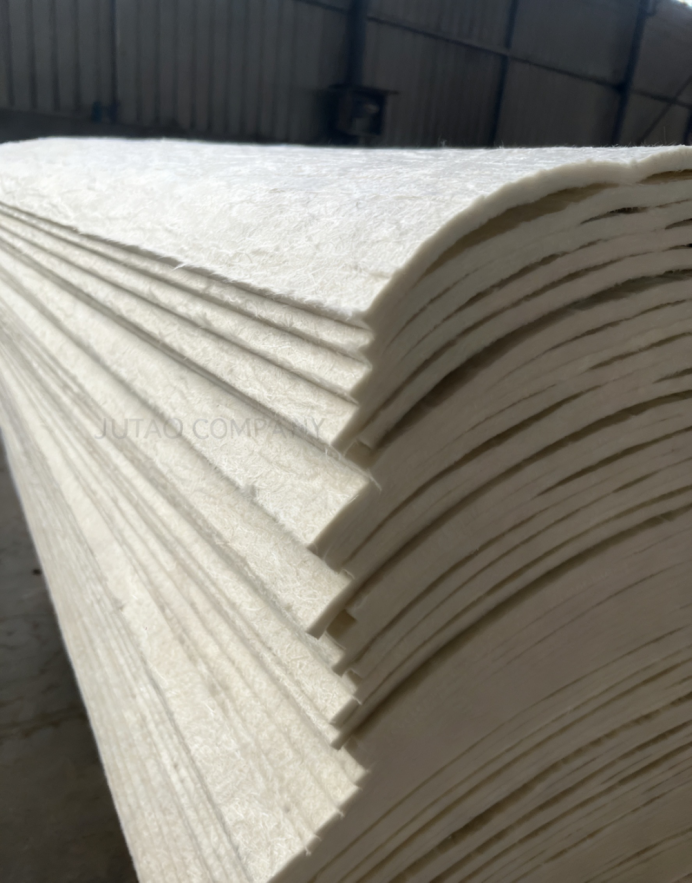
Ceramic-fibre aerogel blankets, glass-fibre aerogel blankets and similar materials have already seen initial application as fire-barrier layers in lithium-ion battery modules.
- Fire-Resistant and Thermal-Insulation Layers for Firefighting Clothing
Firefighting suits serve as crucial protective barriers for firefighters operating in hazardous environments. Excellent thermal insulation is essential to minimise burn injuries while maintaining flexibility for mobility.
With advances in materials science, new high-performance insulation materials—including aerogels—have been incorporated into modern firefighting garments. These materials significantly raise protective standards and provide more reliable safety for firefighters operating in highly dynamic and unpredictable fire scenes.
Jutao Environmental Technology — Specialists in Aerogel Material Solutions
Stay connected with us for the latest updates, industry insights and application solutions in the aerogel sector.