













Aerogel – Opening a New Era of Energy-Efficient Buildings
- Applications in Residential Buildings
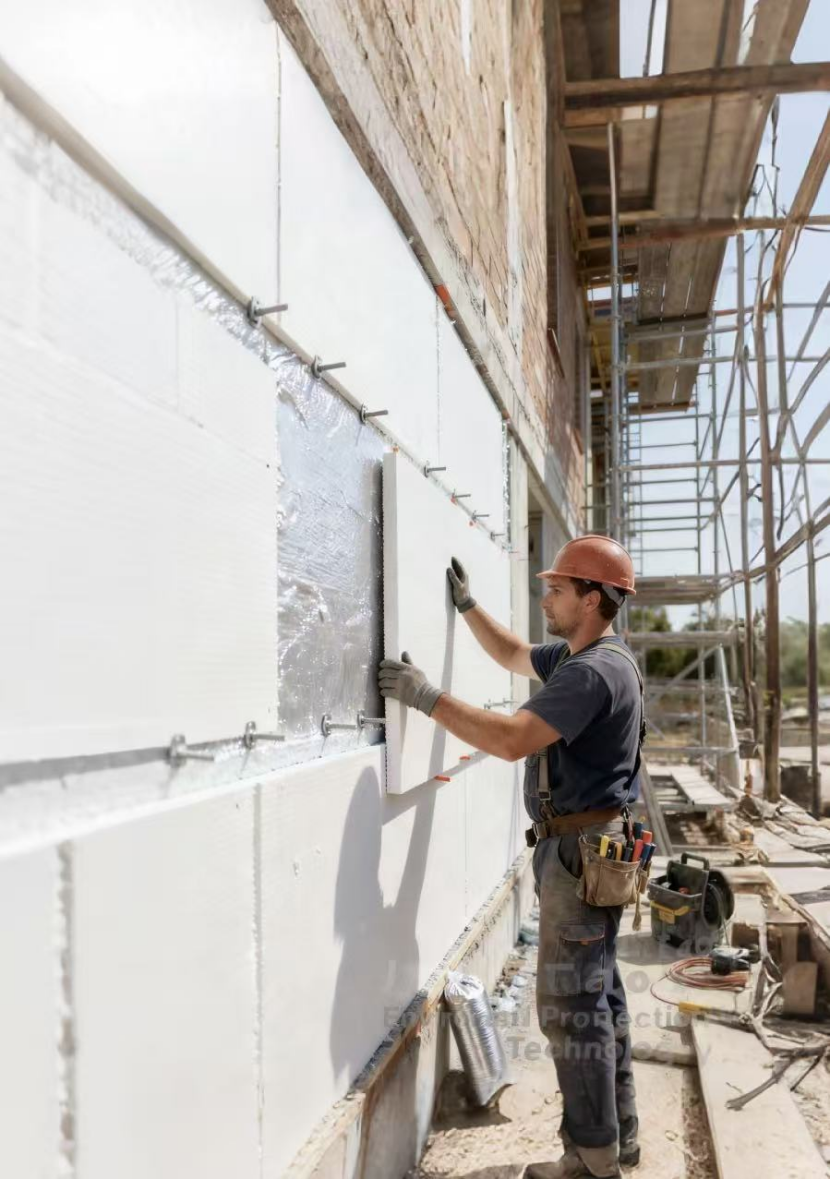
External Wall Insulation
Aerogel coatings, blankets and insulation boards can be applied to exterior walls to significantly reduce heat transfer. This ensures warmth in winter and coolness in summer, while greatly lowering energy consumption and reducing the load on heating and cooling systems.
Roof Insulation
As one of the primary sources of heat loss, roofs benefit enormously from aerogel’s extremely low thermal conductivity. Aerogel insulation effectively blocks heat exchange caused by solar radiation and temperature differences, improving overall indoor comfort.
Window and Door Systems
- Thermal insulation for window and door frames
- High-performance aerogel glazing / transparent insulating films
These technologies enhance airtightness, thermal performance and reduce condensation.
Interior Walls and Floors
Aerogel is ideal for thin-layer insulation applied to interior walls and underfloor heating systems, improving thermal efficiency without sacrificing living space.
- Public Buildings (Commercial, Office, Transport Hubs, Hotels, etc.)
Large-scale public buildings typically experience high energy consumption. Aerogel helps to:
- Reduce heating and cooling energy demands
- Improve indoor comfort
- Slow the rate of thermal load variation, increasing overall efficiency
Suitable for:
- Curtain-wall systems • Roof insulation
- Pipework and ventilation ducts • External insulation for metal structures
- Industrial Buildings (Factories, Warehouses, Logistics Centres)
Industrial buildings often face challenges such as high-temperature equipment, substantial heat loss and large internal spans.
Aerogel can be used for:
- Roof and wall insulation in industrial facilities
- Thermal insulation in cold-chain storage
- Pipes, tanks and furnace insulation
Key advantages include:
- Significant reductions in energy use
- Less thermal stress on structures
- Improved stability of working temperatures
- Schools, Hospitals and Sports Facilities
Aerogel enhances:
- Indoor temperature stability
- Efficiency of HVAC systems
- Overall comfort, reducing hot or cold zones
It is also suitable for specialised areas such as:
- Acoustic and thermal walls in libraries
- Temperature-controlled spaces in medical facilities
- Insulated roofs for large-span sports halls
Key Performance Features of Aerogel
- Exceptional Thermal Insulation
- Thermal conductivity as low as 0.012–0.024 W/(m·K)
- 2 mm aerogel coating equals 35 mm of traditional insulation mortar
- Nano-scale pores form an almost “vacuum-like” insulating barrier
Thermal mechanisms include:
•No convection • Suppressed thermal radiation • Slowed conduction
Performance remains stable even at elevated temperatures.
- Safety and Long-Term Durability
- Class A non-combustible, offering superior fire protection
- Hydrophobic, mould-resistant and waterproof
- Highly stable, with a service life exceeding 20 years
- Ultra-lightweight, reducing structural load by 70–90%
- Flexible Construction and Broad Compatibility
Suitable for:
•Metal • Concrete • Masonry surfaces
Effective on flat, curved or complex geometries.
Supports brushing, rolling and spraying.
Water-based and environmentally friendly, fully aligned with green-building standards.
Conclusion:
With its thin profile, high efficiency, long durability, environmental safety and excellent fire performance, aerogel is rapidly becoming a core material for energy-efficient upgrades in residential, commercial, industrial and public buildings. It marks a clear shift from traditional bulky insulation towards lightweight, high-performance and multifunctional solutions.
Follow Jutao Environmental Technology for more insights into aerogel materials and innovations.