



News





0102030405
A Complete Guide to Aerogel Insulation for Oil & Gas Pipelines
2026-06-11
In the global network of oil and gas extraction, long-distance transportation and refining operations, pipeline systems serve as the core infrastructure for energy delivery. Exposed pipelines, subsea pipelines, downhole transmission lines and complex on-site pipe racks constantly operate under harsh conditions including alternating high and low temperatures, humid corrosion and limited installation space. Traditional thermal insulation materials can no longer balance thermal insulation efficiency, service life and overall operation & maintenance costs effectively.
Thanks to its ultra-low thermal conductivity, stable temperature resistance, excellent waterproofing and fireproof performance, aerogel insulation materials have become the leading choice for oil and gas pipeline insulation. When combined with derivative products such as vacuum insulation panels, they can meet the full-range requirements of conventional oil & gas transmission, cryogenic LNG transportation and high-temperature steam tracing. This guide comprehensively elaborates on the application of aerogel insulation systems for oil and gas pipelines from material properties, product categories, application matching, selection criteria, construction guidelines and maintenance management. It delivers a full reference for industry procurement, project planning and technical implementation.
1. Core Challenges & Material Selection Requirements for Oil & Gas Pipeline Insulation
Oil and gas pipelines operate in highly diverse environments, with distinct differences in medium temperature, installation location and service life requirements across different lines, setting strict standards for insulation materials.
Long-distance oil and gas pipelines commonly suffer from heat loss. Excessive heat dissipation in pipelines carrying high-temperature crude oil and heavy oil will increase medium viscosity, resulting in wax precipitation, solidification and pipeline blockage. For cryogenic liquefied natural gas (LNG) pipelines, external heat ingress must be strictly prevented to avoid medium vaporization and ensure transportation safety.
Pipelines installed in offshore areas, open-air zones and underground pipe racks are exposed to high humidity for extended periods. Once conventional insulation materials absorb moisture, their thermal performance will deteriorate sharply and trigger under-insulation corrosion on pipeline outer walls, greatly shortening the overall service life of pipelines.
In addition, most pipe racks for oil and gas projects feature compact space. Renovation of old pipelines and layout of offshore platform pipelines rule out thick insulation layers, which demands insulation solutions that are thin, lightweight and highly efficient. As the oil and gas industry is classified as a high-risk operation sector, insulation materials must deliver superior fire resistance, and withstand pipeline vibration as well as thermal expansion and contraction to prevent detachment and deformation during long-term service.
To sum up, qualified insulation materials for oil and gas pipelines need to satisfy six core criteria: low thermal conductivity, wide temperature resistance range, water repellency and moisture proofing, Class A fire rating, high mechanical stability and long service life. These are also the major drawbacks of traditional materials including rock wool, aluminum silicate and polyurethane.
2. Core Aerogel Insulation Products & Basic Performance Parameters
Three main types of aerogel insulation products are widely applied to oil and gas pipelines: aerogel insulation blankets, custom composite insulation boards and vacuum insulation panels. Each type has unique performance advantages and can be used in combination based on actual pipeline working conditions. All products have passed standardized testing with stable and reliable performance data.
2.1 Aerogel Insulation Blanket
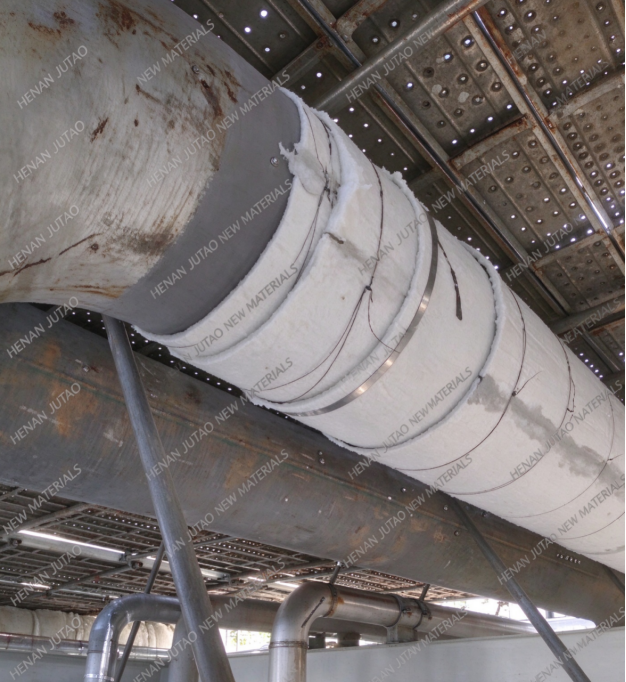
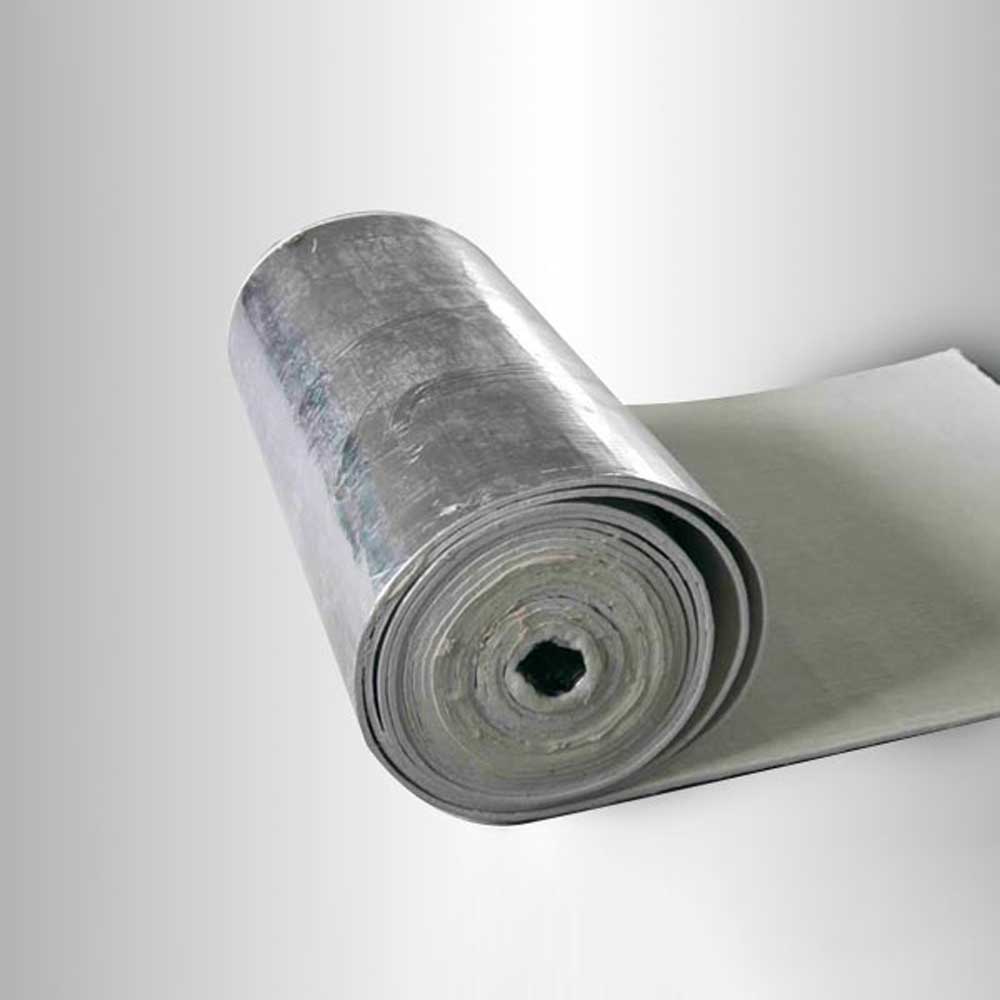
As the most widely used base material for oil and gas pipeline insulation, aerogel insulation blanket features a thermal conductivity below 0.018 W/m·K, ranking among the top tier of conventional insulation materials. It is low-dust and certified with Class A fire rating, fully complying with fire safety regulations for oil and gas facilities.
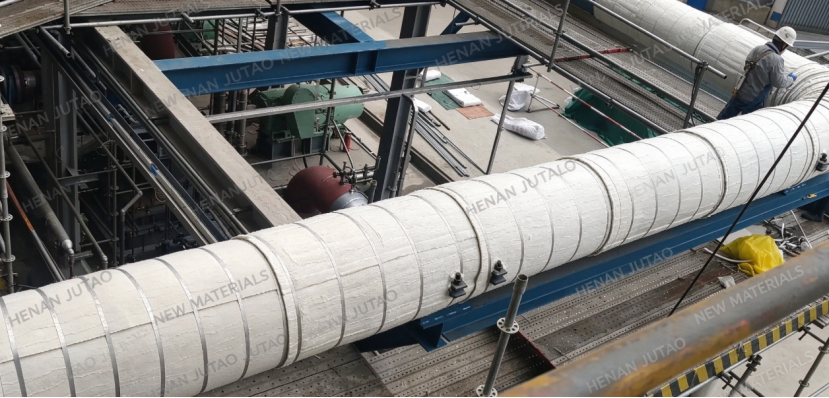
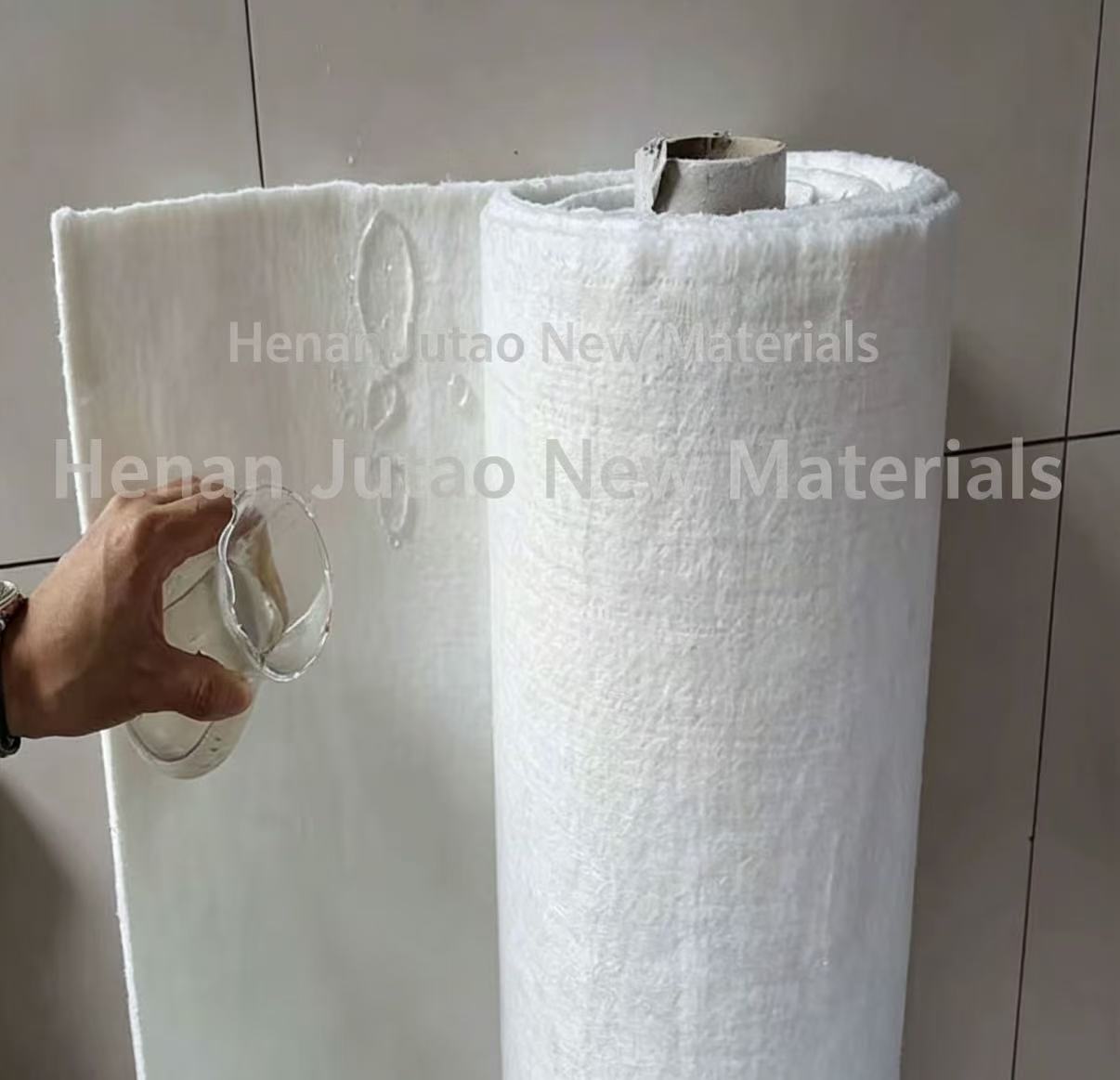
This product boasts an extensive temperature resistance range, suitable for pipelines operating from sub-zero temperatures up to 300°C. The reinforced version can withstand extreme temperatures up to 650°C, ideal for steam tracing lines and high-temperature process pipelines in refineries. To achieve the same insulation effect, the thickness of aerogel insulation blanket is only 1/3 to 1/5 of traditional insulation materials, which saves substantial space in pipe racks. Its lightweight design adds no extra load to pipeline supports. Moreover, the outstanding water repellency effectively resists moisture erosion in open-air and offshore environments, mitigating pipeline corrosion fundamentally.
2.2 Custom Composite Insulation Board
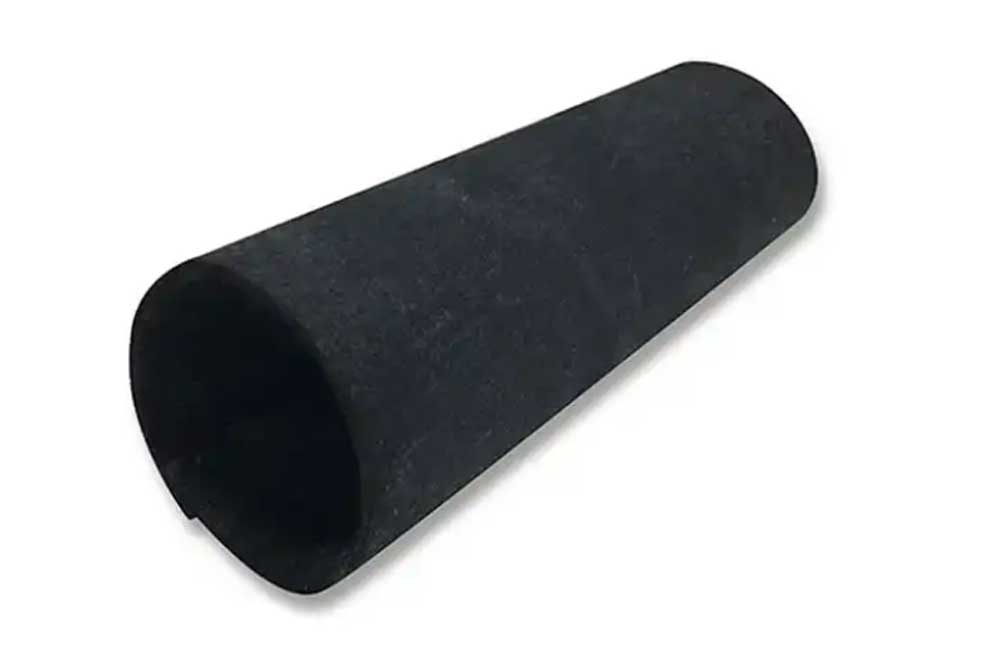
Developed for irregular pipelines and integrated insulation demands, custom composite insulation board combines thermal insulation and sound absorption functions, and supports customized processing and OEM production.
Intensive pipeline networks at oil and gas plants generate continuous operational noise, while composite boards can block noise transmission while maintaining high-efficiency insulation. Eco-friendly and free of harmful substances, they are perfect for ground pipelines and workshop transmission lines with frequent personnel activities. Featuring rigid structure, these boards fit tightly around elbows, tees, valves and other irregular pipe fittings, eliminating thermal bridges and local heat leakage.
2.3 Vacuum Insulation Panel
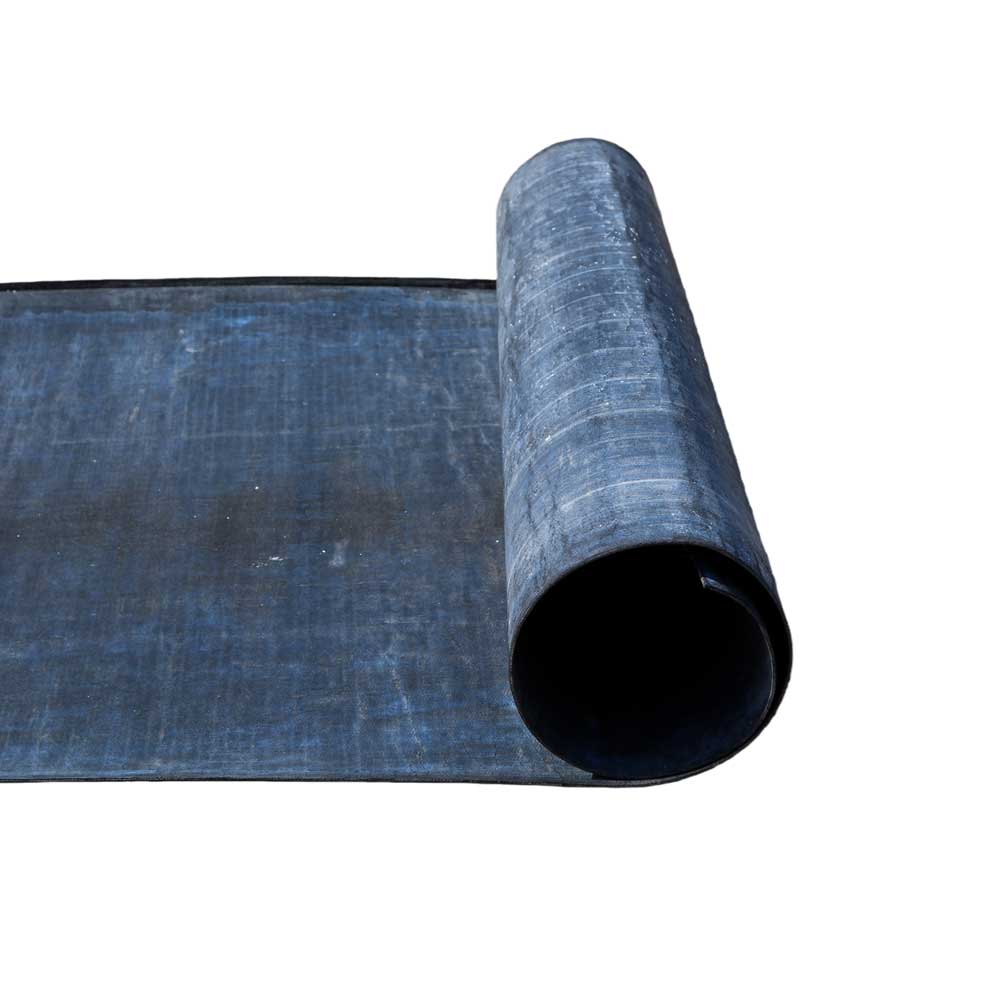
Vacuum insulation panel (VIP) is the premium solution for ultra-high-performance insulation scenarios, with industry-leading thermal performance. Its thermal conductivity can drop below 0.0045 W/m·K, and certain specifications register less than 0.005 W/m·K.
By blocking heat transfer via vacuum technology, VIP delivers extremely high thermal resistance, making it the optimal choice for LNG cryogenic pipelines and deep-sea low-temperature pipelines with stringent temperature control requirements. Its most remarkable advantage is the ultra-long service life of up to 60 years under normal working conditions, far exceeding traditional insulation materials and drastically reducing later replacement and maintenance frequency. With stable structure and excellent anti-aging & anti-shrinkage properties, VIP retains consistent insulation performance even in confined and harsh environments such as deep sea and underground areas, offering high cost performance for long-lifespan oil and gas pipeline projects.
3. Material Matching Solutions for Different Oil & Gas Pipeline Scenarios
Based on operational conditions of various oil and gas pipelines and performance characteristics of aerogel products, we categorize four mainstream application scenarios with dedicated material matching schemes for accurate product selection.
3.1 Long-Distance Pipelines for Normal-Temperature Crude Oil & Natural Gas
As the most common pipeline type in the oil and gas industry, these lines carry medium at ambient temperature and are installed on open land, underground or in mountainous pipe racks. The core requirements include basic thermal insulation, moisture & corrosion resistance, thin profile and easy installation.
Aerogel insulation blanket is the top choice, and a single layer can meet standard insulation needs. For buried pipelines, its superior water repellency isolates soil moisture and protects pipeline outer walls. For pipelines in mountainous areas and narrow pipe racks, the thin and flexible blanket fits pipeline curves perfectly and simplifies construction. For elbows, flanges, valves and other irregular components along the routes, use small custom composite boards for full sealing to eliminate heat loss and moisture penetration.
3.2 High-Temperature Steam Tracing Pipelines & Refining Process Pipelines
In heavy oil extraction sites and refineries, a large number of pipelines operate at 300°C to 650°C. Traditional insulation materials tend to age and pulverize rapidly under sustained high temperatures, leading to degraded insulation performance.
Reinforced high-temperature resistant aerogel insulation blanket is prioritized here, featuring exceptional thermal stability without deformation or performance degradation during long-term high-temperature operation. Given the high fire risk around high-temperature pipelines, its Class A fire rating effectively eliminates fire hazards. For dense high-temperature pipe networks in plants, combine aerogel insulation blankets with composite boards, and reinforce all joints to secure insulation effect and lower operational risks.
3.3 Cryogenic LNG Pipelines & Ultra-Low Temperature Oil & Gas Pipelines
The biggest challenge for cryogenic pipelines is to block external heat ingress and prevent vaporization of low-temperature medium, which sets extremely high requirements for insulation capacity.
Vacuum insulation panel acts as the core material for this scenario. Its ultra-low thermal conductivity builds a robust thermal barrier to maintain stable low temperature inside pipelines. For long-distance cryogenic lines such as deep-sea LNG pipelines and tank connecting pipelines, adopt vacuum insulation panels as the primary insulation layer, with aerogel insulation blankets as the outer protective layer. The dual-layer structure resists deep-sea water pressure, seawater corrosion and ambient temperature fluctuations. Note that vacuum insulation panels are prefabricated products; all dimensions must be customized and cut before construction to avoid damage to the vacuum structure on site.
3.4 Offshore Platform & Nearshore Oil & Gas Pipelines
Nearshore and offshore platform pipelines face three major threats: high humidity, salt spray corrosion and strong wind-induced vibration, which also accelerate wear and tear of insulation materials.
Fully cover the pipelines with aerogel insulation blankets to leverage its water repellency and salt spray resistance for long-term stable operation of pipelines and insulation layers. Apply high-toughness custom composite boards to reinforce pipeline supports and suspended pipelines with frequent vibration, preventing insulation layer detachment. Given the limited space on offshore platforms, the thin and lightweight features of all three aerogel products perfectly adapt to compact platform layout designs.
4. Core Selection Criteria for Aerogel Insulation Materials
When procuring and selecting materials for oil and gas pipelines, follow five key criteria to balance application performance, cost and long-term stability, which are also the major concerns of global oil and gas procurement buyers.
-
Select by operating temperature Temperature is the primary reference index. Standard aerogel insulation blankets are applicable for conventional pipelines with medium temperature below 300°C. Reinforced high-temperature resistant aerogel products are mandatory for pipelines operating at 300°C to 650°C. For sub-zero cryogenic and LNG pipelines, choose vacuum insulation panels to guarantee stable pipeline operation with superior insulation performance.
-
Verify thermal conductivity Thermal conductivity directly determines insulation effectiveness. Select aerogel insulation blankets with thermal conductivity below 0.018 W/m·K for regular oil and gas transmission pipelines. For cryogenic pipelines with strict temperature control requirements, adopt vacuum insulation panels with thermal conductivity lower than 0.005 W/m·K — the lower the value, the stronger the thermal barrier.
-
Evaluate environmental resistance For pipelines in open-air, nearshore and underground humid areas, prioritize aerogel products with low water absorption and high water repellency. For fire-sensitive zones such as oil and gas plants and refineries, confirm all products are rated Class A fire resistance to remove potential fire risks.
-
Assess service life and total cost of ownership For temporary pipelines and short-term maintenance projects, standard aerogel insulation blankets are sufficient. For long-term projects including main long-distance onshore pipelines and permanent deep-sea pipelines, opt for long-lifespan products. Vacuum insulation panels with a 60-year service life greatly cut down costs on replacement, labor and production downtime throughout the full lifecycle. Despite slightly higher initial procurement cost, high-end aerogel solutions deliver far better long-term economic benefits than traditional materials.
-
Match construction and customization demands Choose flexible and easy-to-cut aerogel insulation blankets for projects with numerous irregular pipe components and complex on-site construction conditions. For standardized pipelines for mass installation, pre-order custom composite boards and vacuum insulation panels with tailored dimensions to significantly boost construction efficiency.
5. Standard Construction Procedures & On-Site Precautions
Aerogel products feature simple construction procedures and require no sophisticated equipment, suitable for on-site construction of oil and gas projects worldwide. Standardized installation is critical to ensure ideal insulation effect and long service life. The full construction process includes five steps:
-
Pipeline surface preparation Thoroughly remove oil stains, rust and dust from pipeline outer walls. Repair damaged anti-corrosion coatings in advance to ensure tight adhesion between insulation materials and pipeline surfaces, avoiding adhesion failure and further rust propagation.
-
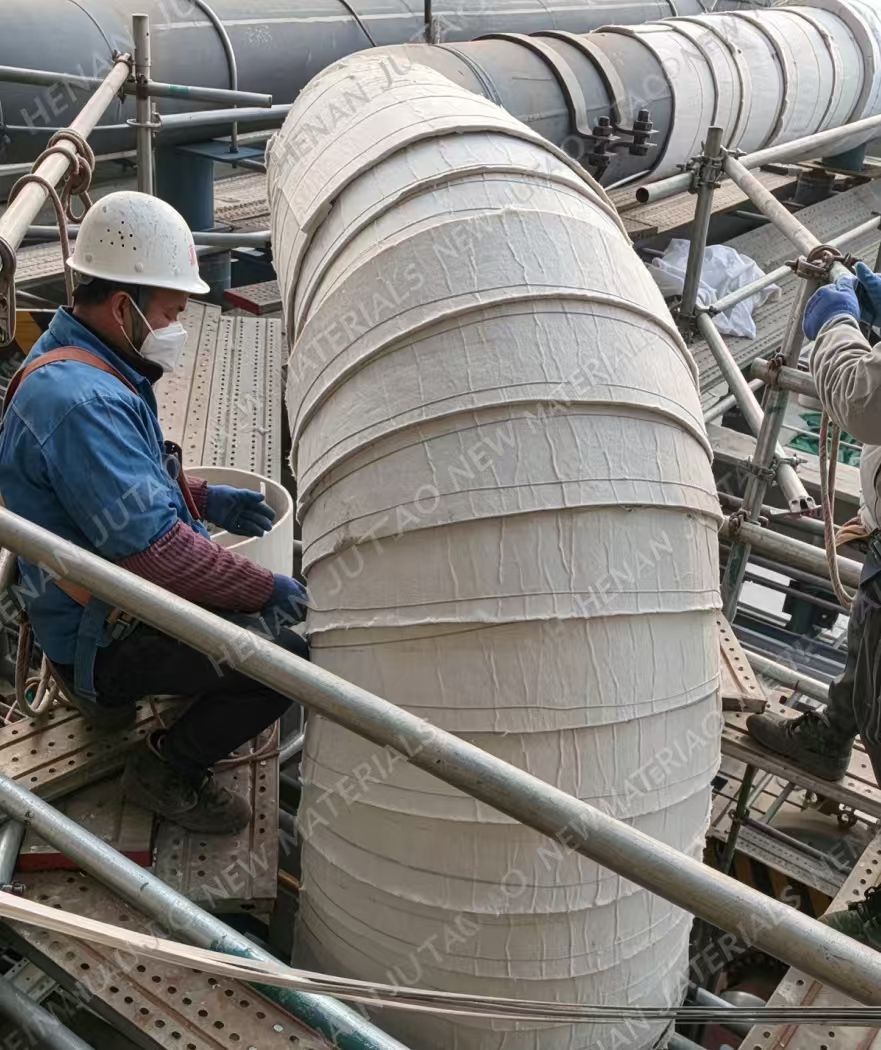
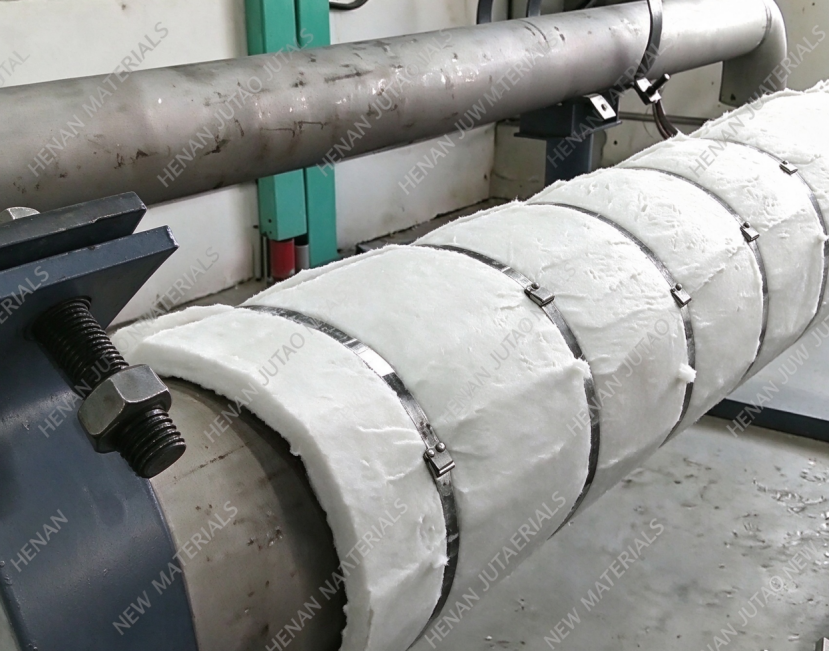
Installation of primary insulation layer Cut aerogel insulation blankets according to pipeline circumference and fully wrap straight pipe sections with tight joints without gaps. Fasten the blankets with dedicated fixtures to prevent sliding. Use segmented custom composite boards to wrap elbows, tees, valves and other complex fittings with no exposed areas.
-
Reinforcement and sealing for special areas Seal all joints with aluminum foil tape for open-air and nearshore pipelines in high-humidity areas to block moisture ingress. Apply high-temperature resistant sealing treatment on joints of high-temperature pipelines to prevent hot air leakage. For cryogenic pipelines using vacuum insulation panels, use matching sealing accessories for joints and never damage the vacuum layer.
-
Outer protection treatment Add an extra outer protective layer for outdoor and offshore pipelines to resist UV rays, strong wind and seawater erosion. For indoor pipelines and ground pipelines inside plants, only joint sealing is required.
-
Post-construction comprehensive inspection Inspect all pipelines and irregular fittings after construction. Check for detachment, gaps and damage of insulation layers, and repair defects in a timely manner.
On-site reminders: Do not cut or strike vacuum insulation panels randomly on site, as broken vacuum structure will lead to complete loss of insulation performance. All sizes must be pre-customized. Although aerogel insulation blankets are low-dust, workers are recommended to wear basic protective gear during construction for health safety.
6. Post-Operation Maintenance & Daily Management Guidelines
Aerogel insulation materials require far less maintenance compared with traditional alternatives. Basic daily management can keep the materials operating stably for decades.
Daily inspection mainly relies on visual checks. Regularly examine the insulation layers for detachment, cracks, water ingress and bulges. Aerogel materials have strong anti-aging and anti-deformation capabilities, and overall damage rarely occurs under normal conditions. For partial damage, simply cut matching materials for local repair instead of removing large areas of insulation, which keeps maintenance costs low.
For nearshore and coastal pipelines, inspect sealing tapes and outer protective layers quarterly, and replace aged or detached sealing components to prevent salt spray and moisture from penetrating the insulation system. Focus on joint sealing status of high-temperature pipelines to avoid heat leakage caused by aging seals under persistent high temperature.
Regular vacuum testing is unnecessary for cryogenic pipelines installed with vacuum insulation panels. The robust structural design enables maintenance-free service for decades. When pipelines are under maintenance, handle insulation components gently to avoid impact on vacuum panels, and restore and seal the insulation layers properly after inspection.
7. Development Trends of Aerogel Insulation in Oil & Gas Pipeline Industry
As the global oil and gas industry moves toward energy conservation, low carbon emission and long-term service, the new insulation system combining aerogel products and vacuum insulation panels is gradually replacing traditional insulation materials.
The global energy industry attaches growing importance to energy saving and emission reduction. The superior insulation performance of aerogel drastically reduces pipeline heat loss and energy waste, complying with low-carbon development policies across the globe and driving rising market demand. Meanwhile, expanding offshore oil and gas exploitation, deep-sea pipeline projects and large-scale LNG facilities impose extremely high requirements on insulation materials for extreme working conditions, and aerogel and vacuum insulation panels are among the few qualified material combinations.
Material compounding and customization have become mainstream development directions. Combine aerogel insulation blankets, composite boards and vacuum insulation panels flexibly for different pipe sections to balance performance and cost. Integrated prefabricated insulation components for large-diameter pipelines, irregular fittings and modular pipe racks simplify on-site construction and accelerate project delivery.
In the future, aerogel insulation products featuring ultra-high insulation performance, long durability and environmental friendliness will dominate the oil and gas pipeline insulation sector worldwide.