



Company News








Setting an Incoming Inspection Plan for Aerogel Panels, Films and Strips

How aerogel blankets change the heat tracing spec on process pipe runs
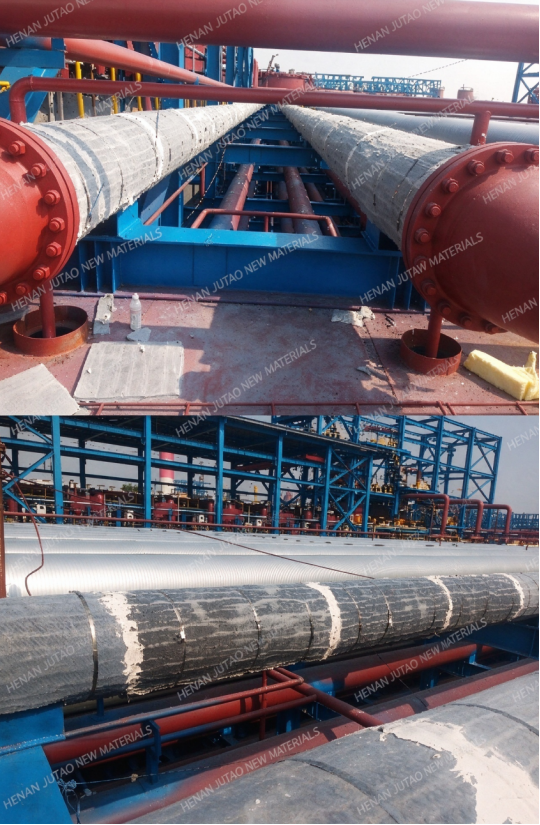
Aerogel Insulation for Industrial Pipes Aerogel Insulation Felt vs. Hydrophobic Nanoporous Insulation Felt: Solutions for Corrosion Under Insulation
Improving Industrial Insulation Performance and Moisture Management
Corrosion Under Insulation (CUI) is a persistent challenge in petrochemical plants, oil and gas facilities, power generation systems, and other industrial environments. When water penetrates an insulation system and remains in contact with metal surfaces, it can contribute to corrosion, insulation degradation, and costly maintenance.
Choosing an appropriate insulation material is therefore important for both energy efficiency and corrosion risk management.
Henan Jutao New Materials offers two insulation solutions for industrial applications: silica aerogel insulation felt and hydrophobic nanoporous insulation felt. Both are designed to combine thermal insulation with water-repellent properties, providing options for projects with different performance and budget requirements.
- Silica Aerogel Insulation Felt
Henan Jutao silica aerogel insulation felt is manufactured by combining silica aerogel with glass fiber through an in-situ sol-gel composite process. This structure integrates the thermal insulation properties of aerogel with the flexibility and handling characteristics of a fibrous reinforcement material.
Key Product Advantages
Exceptional thermal insulation
Silica aerogel features a highly porous nanoscale structure that restricts heat transfer. Aerogel insulation felt can provide approximately two to five times the insulation performance of conventional materials in certain comparisons, depending on the products, temperatures, thicknesses, and test methods involved.
Its low thermal conductivity can help reduce heat loss from hot systems or heat ingress into cold systems, depending on the application.
High water repellency
The product is specified with a hydrophobicity rate exceeding 99%. This water-repellent performance helps resist liquid water penetration and can support moisture management within industrial insulation systems.
The exact test method and reported value should be confirmed against the relevant product documentation.
Reduced insulation thickness
Because of its high thermal efficiency, aerogel insulation felt can achieve a target thermal resistance with less thickness than many traditional insulation materials. This is particularly useful in industrial plants with limited clearance or densely arranged pipework.
Fire safety and durability
The product is designed for industrial thermal insulation applications requiring fire performance and long-term service. The claimed A1 non-combustible classification and expected service life of more than 15 years should be verified against applicable test reports, operating conditions, and project requirements.
Flexible installation
Its lightweight, flexible structure allows convenient cutting and fitting around pipes, valves, tanks, and irregular equipment surfaces. This can help simplify installation and reduce material handling requirements.
- Henan Jutao Hydrophobic Nanoporous Insulation Felt
For projects seeking a balance between thermal performance and overall cost, Henan Jutao also offers hydrophobic nanoporous insulation felt.
This flexible insulation material is produced by combining silica aerogel with specialized fibers through Henan Jutao’s proprietary nanocomposite process.
Compared with the company’s in-situ composite aerogel insulation felt, the hydrophobic nanoporous product is designed to provide a more cost-effective alternative, while retaining key characteristics such as water repellency and vapor permeability. Its thermal performance may be somewhat lower, depending on the specific product specifications.
Key Product Advantages
- Low thermal conductivity
The nanoporous structure helps restrict heat transfer, supporting efficient thermal insulation for industrial pipes and equipment.
- Hydrophobic and vapor-permeable characteristics
The material is designed to resist liquid water penetration while allowing water vapor to pass through under suitable conditions. These properties can help manage moisture within an appropriately engineered insulation system.
- Fire performance and environmental considerations
The product is designed for industrial use, with a focus on fire safety, convenient handling, and material efficiency. Its A1 non-combustible classification and other safety-related properties should be confirmed through the relevant test documentation.
- Cost-effective insulation solution
Compared with the in-situ composite aerogel felt, the hydrophobic nanoporous product is positioned as a more economical option. Actual price differences depend on product specifications, order quantities, and project requirements.
- Easy cutting and installation
The flexible felt can be adapted to different equipment geometries, helping improve installation convenience and reduce material waste.
- Which Insulation Solution Is Right for Your Project?
Both products are intended to support thermal insulation and moisture management. The best choice depends on the required thermal performance, available installation space, fire classification, environmental exposure, and total project budget.
Selection factor Silica aerogel insulation felt Hydrophobic nanoporous insulation felt
Thermal performance Prioritizes high insulation efficiency Balances thermal performance and cost
Moisture management Hydrophobic properties Hydrophobic properties
Vapor permeability Depends on product construction and system design Depends on product construction and system design
Installation Flexible and easy to cut Flexible and easy to cut
Cost positioning Higher-performance option More economical alternative
Typical selection priority Space-constrained or demanding thermal applications Projects prioritizing overall cost-effectiveness
Final material selection should be based on verified technical data and the insulation thickness required to meet the project’s design criteria.
- Industrial Applications
Henan Jutao’s aerogel and hydrophobic nanoporous insulation felts can be considered for a variety of industrial applications, including:
* Petrochemical pipelines: Thermal insulation for process piping exposed to demanding operating conditions.
* Industrial storage tanks: Insulation systems designed to manage heat transfer and moisture exposure.
* Oil and gas facilities: Insulation for suitable process equipment and associated piping.
* Power generation: Thermal insulation for compatible industrial systems and equipment.
* Complex pipework and fittings: Flexible insulation for valves, supports, and irregular surfaces where conventional materials may be difficult to install.
The appropriate material, thickness, protective cladding, and installation method should be determined according to operating temperatures, environmental exposure, and relevant industry standards.
- Reducing CUI Risk Through Better Insulation System Design
Hydrophobic insulation materials can help reduce moisture-related risks, but long-term CUI prevention requires more than selecting a water-repellent material.
For reliable performance, industrial operators should also ensure proper surface preparation and protective coatings where required, secure and weather-resistant external cladding, appropriate sealing around joints and penetrations, and regular inspection of vulnerable areas.
By integrating these measures with suitable insulation materials, operators can improve thermal efficiency, manage corrosion risks, and reduce the likelihood of costly unplanned maintenance.
Conclusion
Henan Jutao New Materials provides two insulation options for industrial customers seeking improved thermal performance and moisture management.
Silica aerogel insulation felt is designed for applications that prioritize high insulation efficiency and reduced thickness. Hydrophobic nanoporous insulation felt offers an alternative for projects seeking a balance between insulation performance and cost.
Both products can contribute to CUI risk management when incorporated into a properly designed, installed, and maintained insulation system.
Looking for a suitable insulation material for your industrial project? Contact Henan Jutao New Materials for product specifications, technical documentation, and application recommendations.
Jutao Environmental Technology — Specialists in Aerogel Material Solutions
Stay connected with us for the latest updates, industry insights and application solutions in the aerogel sector.
Thin-Format Aerogel for Battery Packs and Electronics: Specifying Film, Carbon Blanket and Panel Barriers
Aerogel Format Selection for OEM and EPC Buyers: Blanket, Rigid Panel, Powder and Film Compared
What Makes Aerogel Expensive?
Custom China Facade Systems Преимущества аэрогелей по сравнению с активированным углём
Custom China Facade Systems Advantages of Aerogels Compared with Activated Carbon
Flexible Aerogel Factories Применение адсорбционных свойств аэрогелей в сфере охраны окружающей среды